Shojoshin-in Temple, Koyasan: rooms, rituals and how to book a stay
Shojoshin-in is a temple lodging (shukubo) in Koyasan and a special head temple of the Koyasan Shingon sect. The entrance to Okunoin at Ichi-no-hashi is right in front of it.
Prices start at ¥13,200 or ¥15,400 per person when two or more people share a room. Overnight guests can watch the 6:30 am morning service, join a goma fire ritual held every day at 1 pm, and see the temple’s treasures for free.
By Alex · Updated 19 Nov 2026

Key points
- Shojoshin-in faces the Ichi-no-hashi entrance to Okunoin. Measured in a straight line, it is the closest to Ichi-no-hashi of the 36 temples that booking partners sell, at about 80 m.
- Its history reaches back to Kukai. He founded the temple and carved its principal image, the Hatsuka Daishi, which stays hidden except on April 20. The temple also cares for Uesugi Kenshin’s mausoleum in Okunoin.
- Listed prices are per person, for two or more in a room. A fusuma room starts at ¥13,200 and a walled room at ¥15,400; the gap comes from the dishes served, and tax is not stated.
- Guests can watch the morning service and join the goma. The service begins at 6:30 am and costs nothing, and the fire ritual takes place at 1 pm every day.
- Check in between 2 pm and 5 pm. The front gate shuts with a bell at 5 pm. Booking.com, Trip.com, Agoda and Rakuten Travel all list the temple.
What kind of temple is Shojoshin-in, and how old is it?
Shojoshin-in (清浄心院) is a special head temple of the Koyasan Shingon sect that also runs as a shukubo, and it was founded by Kukai (Kobo Daishi) in the Tencho period. Both the temple and the Koyasan Shukubo Association name Kukai as founder, but they give different years for that period: 824-834 on the temple’s own site, 824-833 on the association’s Japanese page.
From Kita-bo to Shojoshin-in
At its founding the temple was called Kita-bo. It is said that it was later renamed Shojoshin-in by order of the emperor, and the area around it is called Shojoshin-in Valley. After a decline, Taira no Munemori revived it. In 1182-1185, Takiguchi Nyudo, formerly Saito Tokiyori, lived here when he entered Buddhist asceticism.
Feudal lords and Uesugi Kenshin
Uesugi Kenshin, Satake Yoshinobu and other feudal lords became the temple’s parishioners. It was a place of prayer for Uesugi Kenshin and the family temple of the Satake family. The temple maintains the Mausoleum of Uesugi Kenshin in Okunoin, an Important Cultural Property.
Treasures, the cherry tree and the buildings
The principal image, the Hatsuka Daishi, was carved by Kukai on March 20, 835, when he was about to enter eternal meditation. The characters “miunkan”, one of his last words to his disciples, are said to be written on its back. The statue is hidden and shown only on its anniversary, April 20.
Among the other treasures, each an Important Cultural Property, are a standing Amida Nyorai said to be by the sculptor Unkei and two works by Chujo-hime: a mandala of Amida’s Pure Land and the “Origin of Taima-dera Temple”. The temple shows its treasures three times a day, free for overnight guests.
An old umbrella-shaped cherry tree stands inside the gate, and there is an anecdote that Toyotomi Hideyoshi held a cherry-viewing for it. The temple keeps the architectural style said to have been the model for Kongobuji, including a kitchen with a traditional Koyasan cauldron.
Rooms, baths and what a night costs
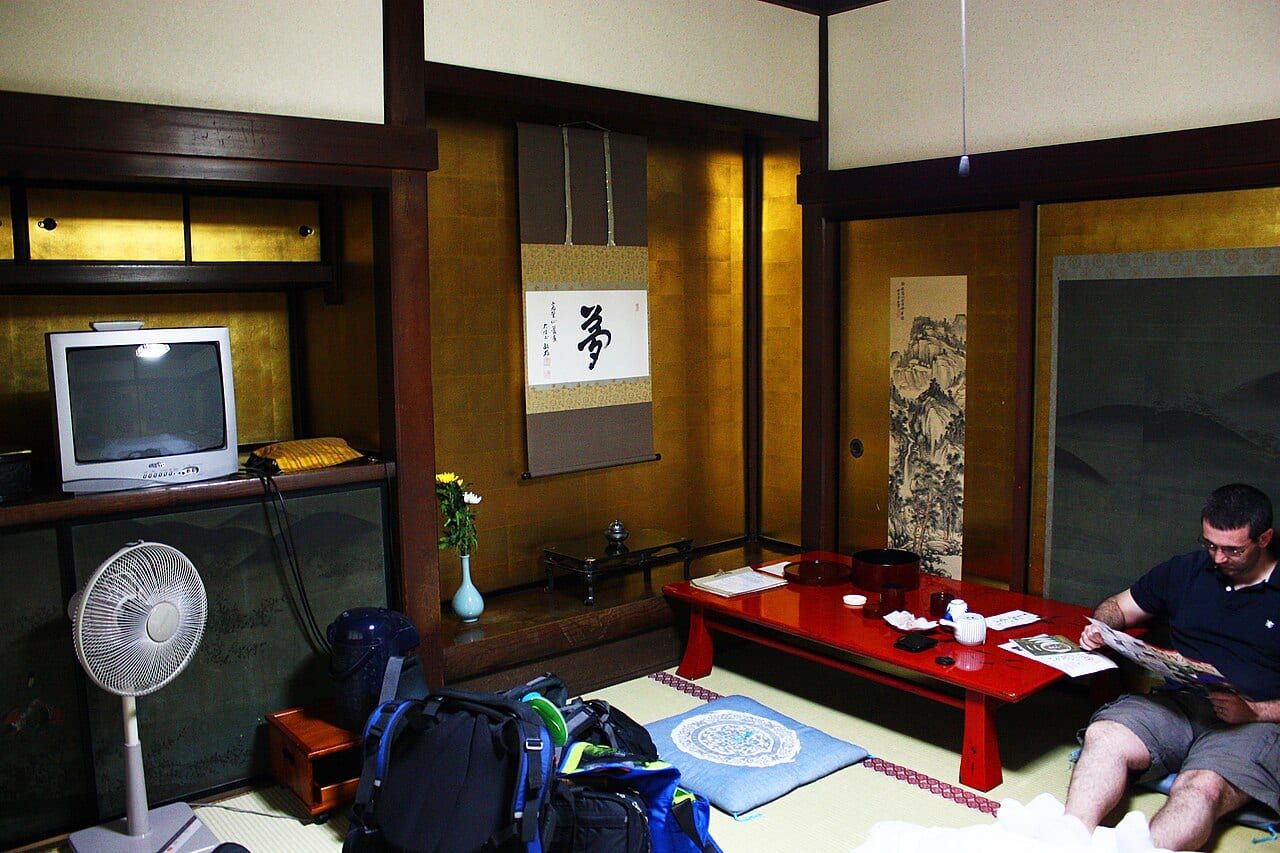
With two or more people in a room, the temple’s prices start at ¥13,200 per person for a room divided by fusuma sliding doors and at ¥15,400 for a room with walls. You can book on the reservation page of the temple’s own website, as well as on the booking sites below. Tax is not stated, and the difference between the two prices comes from the dishes served.
There are 6 rooms with walls and 15 divided by fusuma, plus a large hall, for about 60 individual guests. If you are still choosing between temples, you can compare all 36 temples.
Baths and bedding
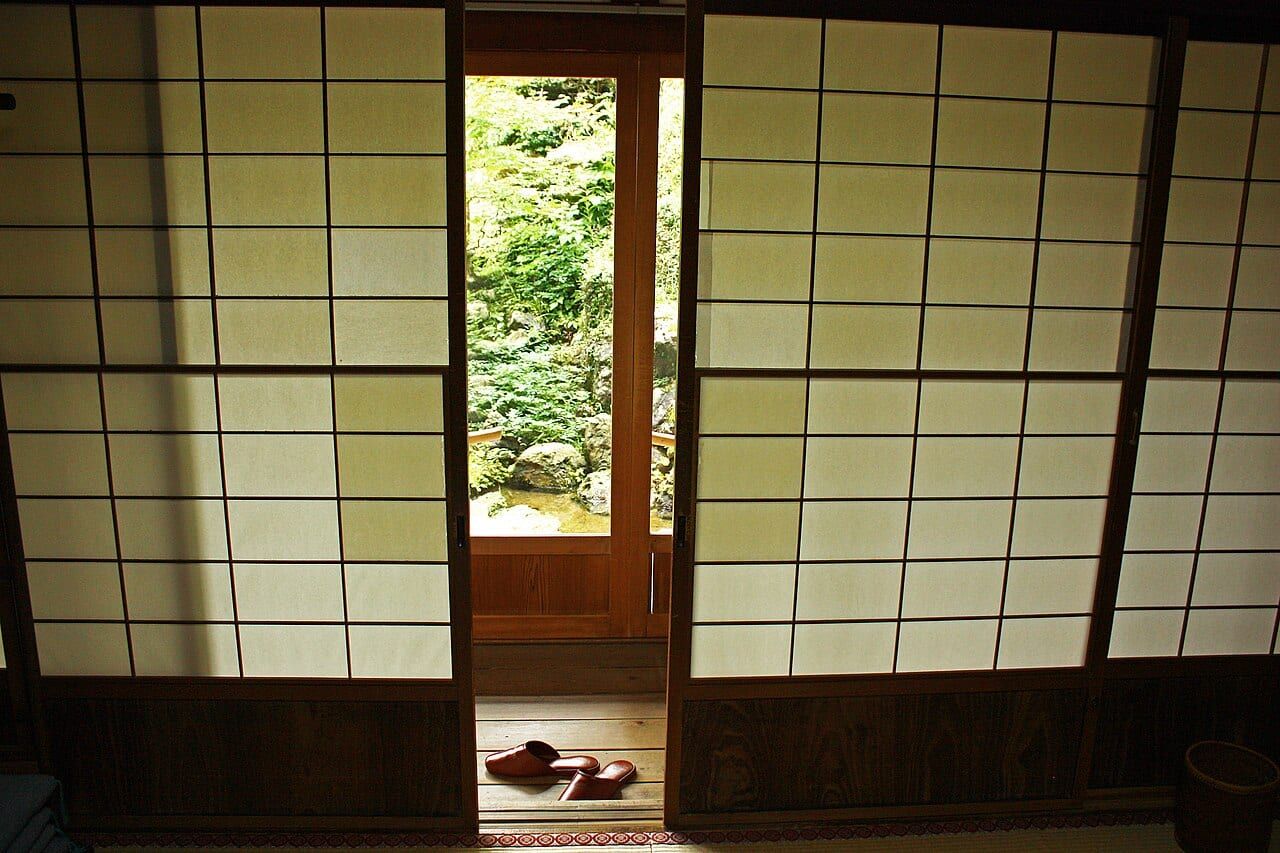
The large baths are separate for men and women, with two for each, one large and one small, and they are open from 4 pm to 9 pm. The sources this guide used do not say whether any room has its own toilet or bath. Futons are laid out before you enter your room, so staff come in as little as possible.

What you can join: goma, morning service and sutra copying
As a guest you can watch the morning service, join the daily goma fire ritual and copy a sutra. The temple association’s Japanese page lists sutra copying and ajikan meditation by reservation; the temple’s own site does not mention meditation, so ask when you book if it matters to you.
Morning service
The morning service starts at 6:30 am in the Reihaido, after a bell, in both summer and winter, and it is free. You can watch about an hour of chanting. A memorial for your ancestors during the service costs ¥2,000 per name.
Goma fire ritual
A goma fire ritual is held every day at 1 pm. On special goma days led by the chief priest, it starts around noon instead; for 2026 the temple lists November 21 to 23 and December 19 to 21. The temple says many guests join it before check-in, or on the day they check out. You may write a prayer on a goma stick and put it in the fire, though not always. Ikeguchi Ekan, chief priest since 2014 and born in Kagoshima, performs goma every day.
Sutra copying and meditation
Sutra copying costs ¥2,000 per person by the temple’s own guide, done in your room after dinner. The association’s English page lists ¥100, which looks like an error; go by the temple’s price.
What you eat at Shojoshin-in
Every meal here is shojin ryori. Dinner is Otoki, Koyasan’s traditional Buddhist vegetarian meal, the same one served to members of the congregation, and it includes sesame tofu. The temple’s shojin ryori is supervised by Aji Kitcho, a restaurant in Osaka.
Dinner starts for everyone at once, so do not be late. Breakfast comes after the morning service and is shojin ryori too.
Where Shojoshin-in is and how to get there
Shojoshin-in is at 566 Koyasan, Koya-cho, Ito-gun, Wakayama, right in front of the Ichi-no-hashi entrance to Okunoin, and the nearest bus stop is Okunoin-guchi. To get there, take the bus from stop No. 2 toward Okunoin-mae.
Measured in a straight line on OpenStreetMap, Shojoshin-in is about 80 m from Ichi-no-hashi, which makes it the closest of the 36 temples that booking partners sell; Hozen-in is 90 m away, measured from its position on the Koyasan Shukubo Association’s map. For the trip to Koyasan itself, see getting to Mount Koya.
Check-in, gate times and other practical details
Check-in is from 2 pm to 5 pm, and check-out is at 10 am. The front gate closes at 5 pm with a bell, and the temple office, where reception is, closes at 6 pm.
The temple answers the phone from 9 am to 5 pm, every day of the year. The temple’s guide says the mountain gets crowded toward noon, so many guests leave early in the morning.
Where to book Shojoshin-in
Shojoshin-in is listed on Booking.com, Trip.com, Agoda and Rakuten Travel. The temple asks guests to book as early as possible to get the room they want.
The temple also takes bookings on its own reservation site. There (checked on November 19, 2026), cancelling from 7 days before arrival costs 50% of the stay, the day before 80%, and on the day or for a no-show 100%; the site notes that terms can differ by night. Booking sites set their own terms.
This guide also has pages on Eko-in and the Komyo-in temple stay, or you can compare all 36 temples before you decide.
Is Shojoshin-in a good fit for you?
It suits you if you want to be near Okunoin, see a daily fire ritual or learn the temple’s history, but not if you arrive after 5 pm.
| Your situation | Good fit? | Why |
|---|---|---|
| You want to stay close to Okunoin | Yes | About 80 m from Ichi-no-hashi in a straight line |
| You want to see a fire ritual | Yes | Goma is held every day at 1 pm |
| You are interested in history | Yes | Founded by Kukai; maintains Uesugi Kenshin’s mausoleum |
| You are traveling alone | — | Listed prices are per person for two or more |
| You need your own toilet or bath | — | Sources do not say if any room has one |
| You will arrive after 5 pm | No | Check-in ends and the front gate closes at 5 pm |
How this guide was researched
This page uses the temple’s official website, the Koyasan Shukubo Association’s English, Japanese and reservation sites, straight-line measurements on OpenStreetMap, and listings on Booking.com, Trip.com, Agoda and Rakuten Travel. In total, 9 sources were read. Where two sources give different figures, both are shown.
FAQ
How close is Shojoshin-in to Okunoin?
It is about 80 m from Ichi-no-hashi, the Okunoin entrance, in a straight line. Both the association’s Japanese page and the temple’s own site describe Shojoshin-in as the temple closest to Okunoin.
What is the Hatsuka Daishi?
It is the temple’s principal image, a statue Kukai carved on March 20, 835. It is hidden and shown only on its anniversary, April 20.
Does Shojoshin-in serve lunch?
Yes. You can book lunch with your stay, or contact the temple in advance for lunch only. Choose between two courses of 10 dishes with sesame tofu for ¥3,750 and three courses of 13 dishes with sesame tofu and a hot pot with Koya watercress for ¥5,400.
Does Shojoshin-in have Wi-Fi and parking?
Yes. There is Wi-Fi everywhere in the temple. Parking has room for 4 buses and 20 cars.
Are towels and a yukata provided?
Yes. Each room has a towel, a bath towel, a toothbrush and a yukata. In winter there is also a tanzen, a padded robe.
Can a priest tell you about the temple?
Yes, if you ask, a priest can give a Dharma talk or tell the temple’s history. It is not always possible, because of capacity.
Sources
- Shojoshin-in official website (shojoshinin.jp)
- Koyasan Shukubo Association (eng-shukubo.net)
- Koyasan Shukubo Association, Japanese site (shukubo.net)
- OpenStreetMap
- Booking.com
- Trip.com
- Agoda
- Rakuten Travel