Eko-in Temple, Koyasan: rooms, rituals and how to book a stay
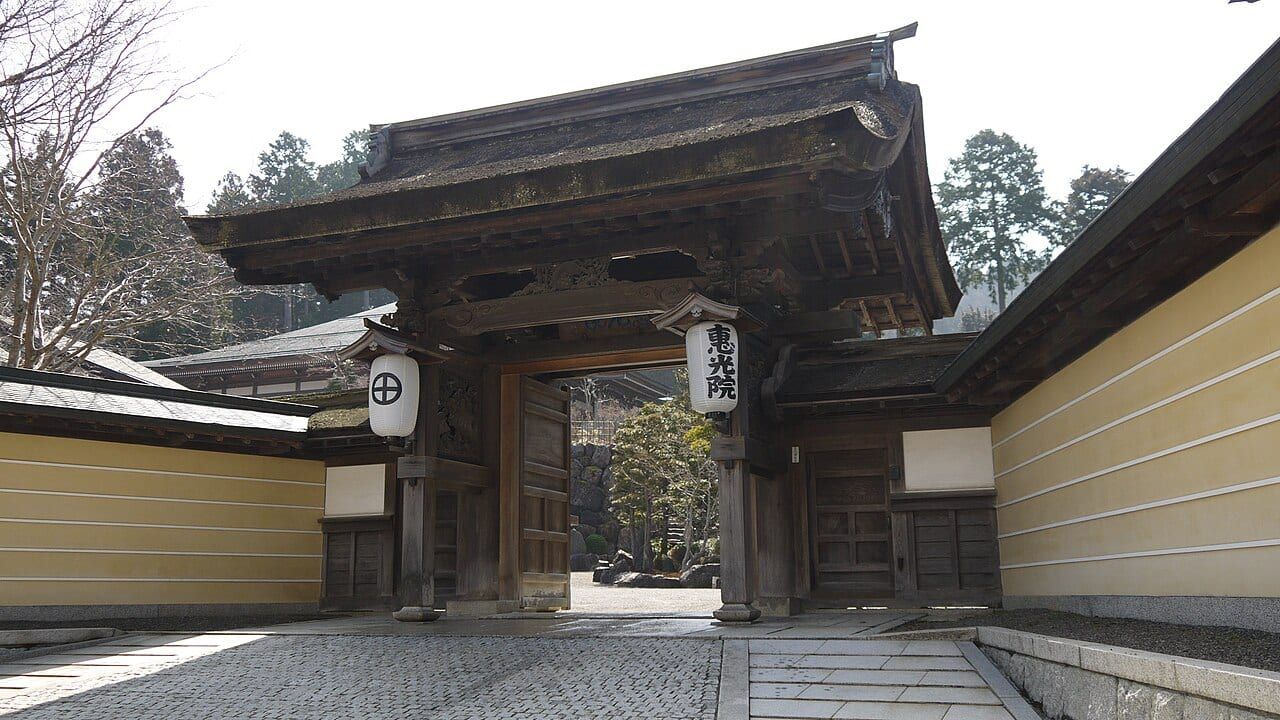
Eko-in is a temple lodging, or shukubo, in Koyasan where you can spend the night, eat temple meals and join daily rituals.
Overnight guests can join the goma fire ritual and ajikan meditation for free. The temple also has English-speaking staff.
By Alex · Updated 19 Nov 2026

Key points
- It sits close to the start of Okunoin. In a straight line, Eko-in is about 200 m from Ichi-no-hashi, the bridge where the Okunoin path begins.
- Booked through the temple association, nights start at ¥21,000. That rate, per adult, includes dinner and breakfast in a compact room with a shared bath.
- The fire ritual and ajikan are free for guests. Goma is held daily at 7:30 am in the Bishamondo, and ajikan starts at 4:30 pm.
- Meals suit vegetarians and vegans. Dinner and breakfast contain no meat, fish, eggs, dairy, onion or garlic.
- Check in from 2 pm, check out by 10:00. Dinner is served at 5:30 pm, so tell the temple if you will arrive later.
What kind of temple is Eko-in, and how old is it?
Eko-in is a shukubo, a temple lodging, that traces its history back about 1,200 years to Kobo Daishi Kukai, who built a five-story pagoda there and enshrined Bishamonten and Fudo Myoo.
Later history
In 1308 Ryocho Ajari was transferred from Toji Temple in Kyoto and rebuilt the temple, whose name was then written 廻向院. Around 1558 the temple had a family relationship with Shimazu Yoshihiro, the 17th head of the Satsuma Clan, and it is the family temple of Akechi Mitsuhide. From 1704, under the order of the 8th shogun Tokugawa Yoshimune, the temple’s name was changed to 恵光院 (Ekoin).
The halls today
The current main hall was rebuilt in 1991 by the 52nd priest and stands on a hill overlooking Koyasan. Its main deities are Amida Nyorai, Kobo Daishi and Fudo Myoo.
The Bishamondo hall is said to have been made by Kobo Daishi Kukai. It enshrines Bishamonten, its main deity, along with Fudo Myoo and Aizen Myoo.
Which rooms does Eko-in have, and what does a night cost?
In the temple association’s reservation system, a night at Eko-in starts at ¥21,000 per adult, tax included, with dinner and breakfast. That rate is for a compact Japanese-style room of 6 tatami mats for 2 people, with a shared bath and toilet.
Room types and prices
Other room types, per adult and night:
- Standard Japanese room, 8–12 tatami, 2–4 people, shared bath and toilet: from ¥22,000
- Superior Japanese-style room, 10 tatami, with bath and toilet: from ¥30,500
- Annex superior Japanese-Western room “Ruri”, 40 square meters, with bath and toilet: from ¥40,500
- Deluxe room “Hisui”, 50 square meters, with bath and toilet: from ¥52,000
- Luxury suite, 100 square meters plus a 70 square meter garden, with a semi-open-air bath: from ¥101,500
The luxury suite, called Gachirin, opened in March 2022.
Beds and layout
Some rooms have beds, and the standard rooms are traditional Japanese-style rooms. The temple has 33 rooms in all: 11 private rooms with walls and 22 divided by fusuma sliding doors.
The compact and standard rooms suit you if sharing a bath and toilet is fine. To weigh these prices against other temples, you can compare all 36 temples.

Morning service, goma fire ritual, ajikan and sutra copying
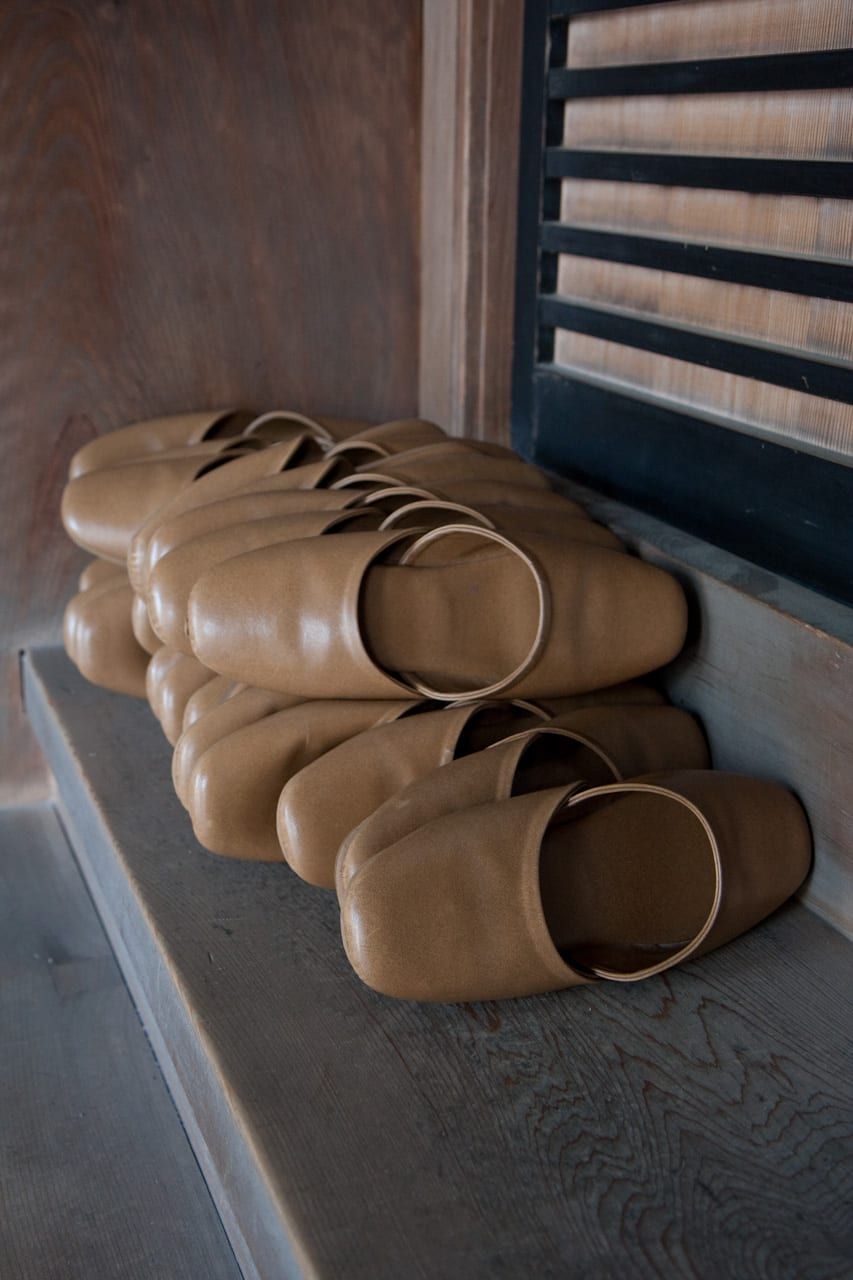
As an overnight guest, you can join the morning service, the goma fire ritual and ajikan, and copy a sutra in your room.
Morning service and goma
For the morning service, the temple association’s page gives a start of 6:30 in summer and 7:00 in winter, free of charge; Eko-in’s own site gives 7 am every day in the main hall, for overnight guests.
After the morning service, a goma (homa) fire ritual is performed every day at 7:30 am in the Bishamondo. Overnight guests can join it without a reservation or a fee.
Ajikan meditation
Ajikan, a meditation method of esoteric Buddhism, is held every day from 4:30 pm for about 40 minutes in the Ajikan Dojo. The monks give instructions, and it is free for overnight guests. The temple association calls ajikan a form of Shingon meditation and says only a few shukubo temples can offer it to private visitors.
Sutra copying
You can copy a sutra in your room at any time; tell the temple at check-in. Dedicating the sutra to Eko-in is free, while dedicating it to Okunoin costs a 1,000-yen donation.
What you eat at Eko-in
Eko-in serves furimai ryori, a banquet food served after the monks’ ceremonies, made without meat or fish, so vegetarians and vegans can eat it.
Dinner and breakfast
Dinner and breakfast exclude meat, fish, eggs, dairy, onion and garlic. Both are served in your room, and groups of four or more eat in a separate room. Dinner is at 5:30 pm; tell the temple if you will arrive after that.
A gluten-free menu is available for guests with a wheat allergy or celiac disease. Allergy requests should reach the temple at least one week ahead, and the temple has only one kitchen.
Lunch for visitors
Lunch is shojin ryori, Buddhist cuisine, served from 11 am to 1 pm by reservation only. Visitors who are not staying can book it too:
- Matsu: ¥7,800, three courses, about 12 items
- Take: ¥5,800, two courses, about 10 items
- Gluten-free: ¥5,800
The Ume meal (¥3,800) cannot be reserved for lunch. Online lunch bookings close 3 days ahead; after that, Eko-in takes them by phone.
Where Eko-in is and how to get there
Eko-in is at 497 Koyasan, Koya-cho, Ito-gun, Wakayama, Japan, about 200 m in a straight line from Ichi-no-hashi, the first bridge and the start of the path through Okunoin.
Distance to Okunoin
Of the 36 temples that booking partners sell, 4 are closer to Ichi-no-hashi than Eko-in in a straight line: Shojoshin-in (80 m), Hozen-in (90 m), Sekisho-in (150 m) and Kumagaiji (160 m).
By bus or car
Eko-in is 15 minutes by bus from Koyasan Station, then 2 minutes on foot from the Karukaya-mae bus stop. The temple association says to take the bus from the No. 2 bus stop bound for Okunoin-mae, and gives the nearest stop as Karukayado-mae.
By car, the temple is about 2 hours from Osaka and about 3 hours and 40 minutes from Nagoya. It has 30 free parking spaces on its grounds, which cannot be reserved. For the trip to Koyasan Station itself, see getting to Koyasan from Osaka.
Check-in, check-out and other practical details
Check-in starts at 2 pm and check-out is by 10:00. Sources differ on how late you can check in: the temple association’s page gives check-in as 14:00–17:00, its reservation system as 14:00–17:30, and Eko-in’s site gives a last check-in of 7 pm. If you book through the association’s site, its page for Eko-in warns that after 5:30 pm dinner may not be served: the booking then counts as a same-day cancellation and the meal fees are not refunded. If you may arrive late, tell the temple in advance.
Eko-in’s Japanese site announces that the temple is closed from January 3 to January 8.
Bathing and amenities
The temple has a large bathing area with warm water from the springs of Koyasan, open from 3 pm to midnight and from 6 to 9 am. Those are the hours on Eko-in’s Japanese page; its English page writes them as “3 to 12 pm”. None of the sources this guide used say that Eko-in has an onsen (natural hot spring).
Toiletries, towels, bath towels and yukata are provided. Free Wi-Fi is available in all rooms, and the lobby has computers, printers and a coffee maker for guests. All rooms are non-smoking, with a designated outdoor smoking area.
Who can stay
Guests of any religion or denomination can stay. Women traveling alone are welcome; the temple has female staff and many female guests.
Where to book Eko-in
You can book Eko-in in the temple association’s reservation system or on Eko-in’s official website, and Trip.com, Booking.com and Agoda also list it.
Reservations in the association’s system are confirmed right after you complete the booking, and Eko-in’s official website takes reservations up to 11 months in advance.
Cancellation
In the association’s reservation system (checked on November 19, 2026), Eko-in charges 100% of the stay if you cancel from 7 days before arrival on its standard plans, from 14 days before on the higher-class and premium room plans, and from 30 days before on the annex and suite plans. Terms can differ on other booking sites, so check the policy shown when you book.
Is Eko-in a good fit for you?
The table matches Eko-in’s facts to a few common situations.
| Your situation | Good fit? | Why |
|---|---|---|
| You want to stay near Okunoin | Yes | About 200 m from Ichi-no-hashi, in a straight line |
| You eat vegan or gluten-free | Yes | Vegan-friendly meals; gluten-free menu, ask at least a week ahead |
| You need a private bathroom | Only in some rooms | Superior rooms and above have their own bath and toilet |
| You want the night tour included | No | It needs a separate reservation; Eko-in is the meeting place |
How this guide was researched
This page draws on the Koyasan Shukubo Association (its English and Japanese sites and its reservation system), Eko-in’s official website, OpenStreetMap, the Trip.com, Booking.com and Agoda listings, and the website of the night tour’s organizer. In all, 16 sources were read.
FAQ
Do the rooms at Eko-in have a private bathroom?
Yes, but only the superior rooms and above have their own bath and toilet. Of the 36 temples partners sell, 11 have rooms with a private bath and 17 rooms with a private toilet.
Does Eko-in have English-speaking staff?
Yes. Eko-in has English-speaking staff.
Is the Okunoin night tour included in a stay at Eko-in?
No. The night tour is not included in Eko-in’s accommodation plan and needs a separate reservation; it is run by another company, Awesome Tours, and Eko-in is only the meeting place. Awesome Tours’ own website says reception is inside TAIRA, where you get the meeting time and place, so follow the organizer’s instructions when you book. From March to November it often gets fully booked, so check Okunoin night tours early.
Can visitors who are not staying join the ajikan meditation or the fire ritual?
Yes. Visitors who are not staying can apply in advance for the goma fire ritual and can join ajikan for an offering of 2,000 yen. Preschool-age children cannot take part in ajikan, and groups of more than five should contact the temple first.
Does Eko-in have a curfew?
No. Eko-in has no curfew, so there is no set hour by which you must be back at the temple.
Can Eko-in store my luggage?
Yes. Eko-in can store your luggage before and after check-in.
Sources
- Koyasan Shukubo Association (eng-shukubo.net)
- Koyasan Shukubo Association reservation site (koyasan-shukubo.net)
- Koyasan Shukubo Association, Japanese site (shukubo.net)
- Eko-in official website (ekoin.jp)
- OpenStreetMap
- Trip.com, Booking.com, Agoda
- Koyasan Okunoin night tour official website (www.night.koyasan-okunoin.com)