Shojin ryori at Koyasan: temple food, goma-dofu and where to eat it
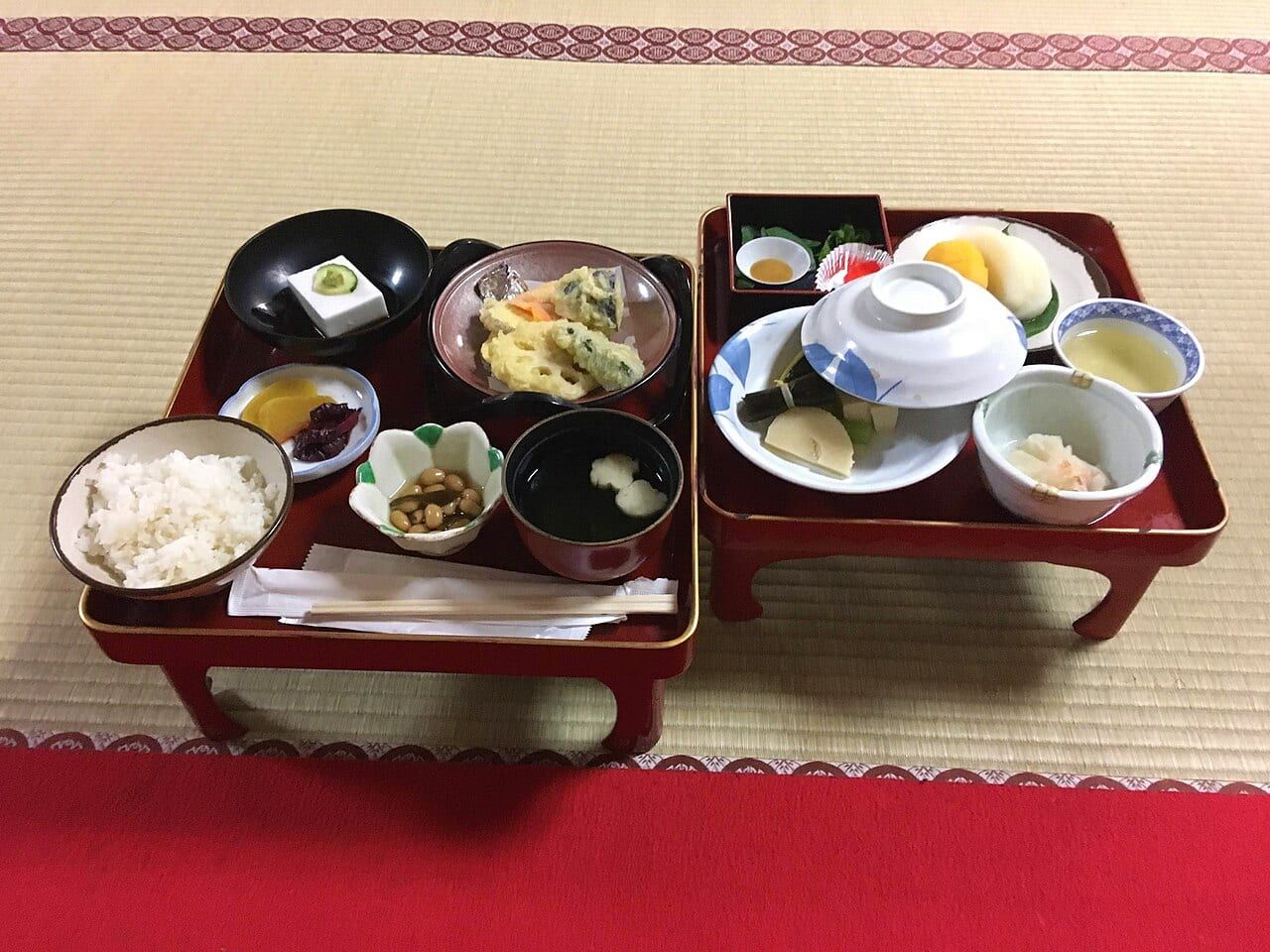
Shojin ryori is Buddhist cuisine made without meat or fish, using only seasonal vegetables and bean products. At Koyasan, you can eat it at dinner and breakfast on a temple stay, or book a lunch at some temples without staying the night. Temples differ on gluten-free and allergy requests, so check their policies before you book.
By Alex · Updated 12 Nov 2026

Key points
- Shojin ryori leaves out meat and fish. It is built on vegetables in season and bean products. At Koyasan, it goes back to Kukai’s founding and is still kept by many priests and temples.
- Shukubo meals very often include two tofu dishes. Goma-dofu is roasted white sesame, ground and boiled with kudzu starch. Koya-dofu, a freeze-dried tofu, grew out of how priests lived in Koyasan’s cold climate.
- Half board comes with the temple association’s night prices. Expect ¥15,000-25,000 per adult if the bath and toilet are shared, or ¥20,000-70,000 for a private toilet or bath.
- You can book lunch without staying. Eko-in, Shojoshin-in and Komyo-in serve lunch to non-guests by reservation, with prices from ¥3,750 at Shojoshin-in. Komyo-in’s lunch is basically only on Sundays.
- Diet needs vary by temple. Eko-in’s dinner and breakfast suit vegans, and its gluten-free menu needs at least a week’s notice. Ichijo-in has no option for gluten-free diets or soy and wheat allergies.
What is shojin ryori?
Shojin ryori is vegetarian Buddhist cooking. At Koyasan, it has followed strict Buddhist precepts against eating meat ever since Kukai founded Koyasan. Many priests and temples have kept it to the present day.
The cooking uses seasonal ingredients and no animal products, and it is also served at rituals, feasts and events as a form of hospitality. If you want to eat it at a temple overnight, compare the temple stays in Koyasan.
Goma-dofu and Koya-dofu
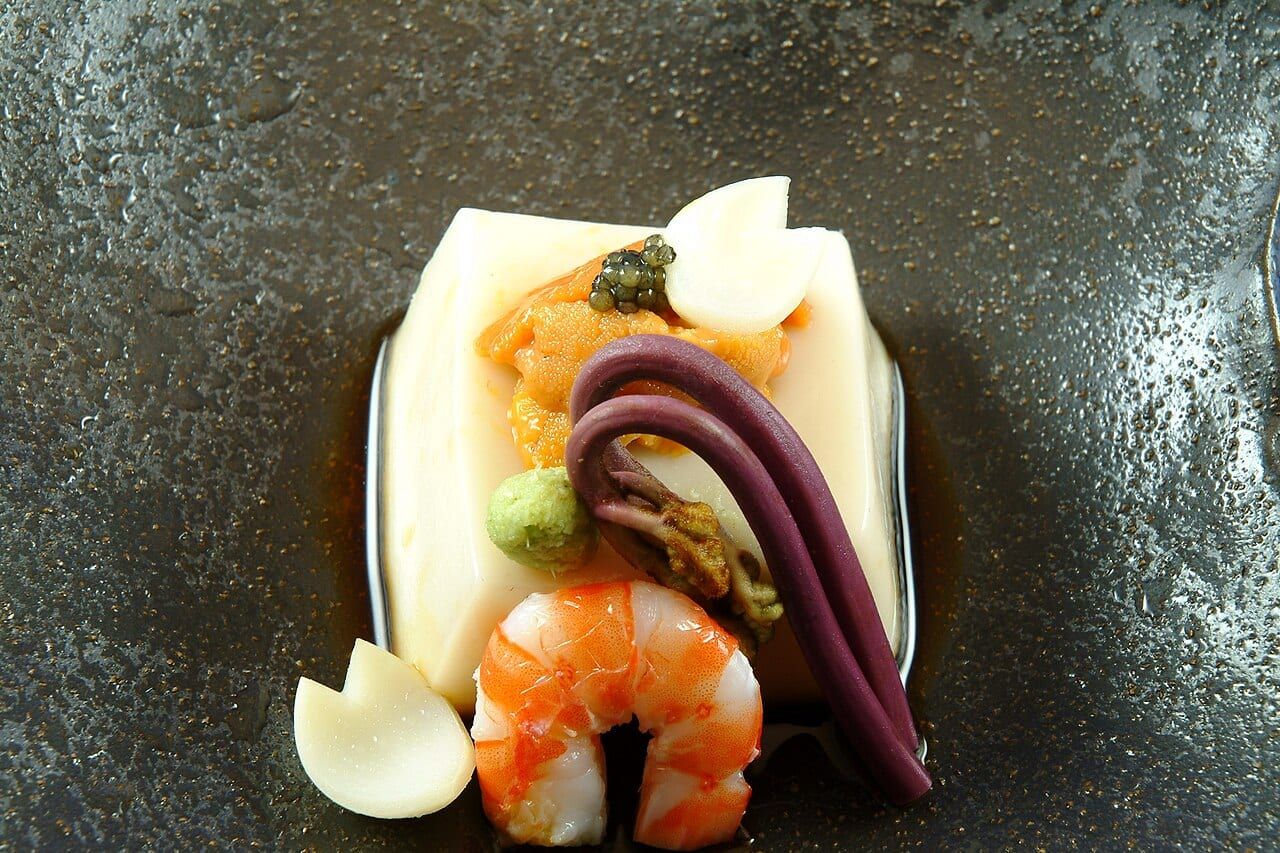
Goma-dofu and Koya-dofu are two tofu dishes that shukubo temples at Koyasan serve very often. Goma-dofu, or sesame tofu, is made by grinding roasted white sesame seeds and boiling them with kudzu starch. Its sticky texture comes from grinding the sesame thoroughly.
Koya-dofu is freeze-dried tofu, born from the daily life of priests in Koyasan’s cold climate. The temple association credits it with making Koyasan’s name known all over Japan. Saizen-in, for one, serves sesame tofu and Koya-tofu with seasonal local food.

How Koyasan’s temple food is made
Koyasan’s temple food is made from limited ingredients and no meat, with a delicate enhancement of natural taste. It is based on Sobo cooking and rooted in Buddhist training. It shows the seasons and matches the five methods, five tastes and five colors. Even wild edible plants of the region are part of Koyasan’s food.
Temples also describe their own cooking. Fukuchi-in cooks with local seasonal vegetables and Koyasan foods such as Koya-dofu and Kinzanji wasabi. Rengejo-in’s breakfast uses shiitake mushrooms, seaweed and dried vegetables. At Fudo-in, dishes such as tempura are fried after guests sit down.
Eating shojin ryori on a temple stay
The temple association’s price ranges for a night at a temple include dinner and breakfast, known as half board. The ranges are ¥15,000-25,000 per adult with a shared bath and toilet, and ¥20,000-70,000 with a private toilet or bath.
Check the temple before you book, though. Zofuku-in serves no meals at the moment, so skip it if the food is part of why you are staying.
How temples serve it
Eko-in serves “furimai ryori”, a banquet food served after the monks’ ceremonies. Its dinner and breakfast are served in your room.
Ichijo-in serves Honkan guests a special course in the tradition of feasts once served at ceremonies at Kongobuji and its temples. The course is made by hand and served in the room on Wajima lacquerware.
Shojoshin-in serves Otoki, Koyasan’s traditional Buddhist vegetarian dinner, which is the same meal served to members of the congregation. Its shojin ryori is supervised by the Osaka restaurant Aji Kitcho.
If you want to eat in your room, Eko-in and Ichijo-in’s Honkan both suit you. For the rest of a temple night, read about staying with monks.
Shojin ryori for lunch without staying
You can book a temple lunch without staying the night at Eko-in, Shojoshin-in or Komyo-in. Each needs a reservation:
- Eko-in serves lunch from 11 am to 1 pm: Matsu for ¥7,800, Take for ¥5,800 or a gluten-free lunch for ¥5,800.
- Shojoshin-in offers two courses for ¥3,750 or three for ¥5,400.
- Komyo-in charges 3,850 or 5,500 yen, and serves lunch basically only on Sundays.
Fukuchi-in has day lunch plans but has suspended lunch bookings, so skip it for lunch while bookings are suspended. Komyo-in suits a Sunday visit. On a day trip, plan the meal around your other things to do in Koyasan.
Shojin curry at the Digital Museum cafe
The Koyasan Digital Museum’s cafe, by the Kongobuji-mae bus stop, serves a Koyasan shojin curry, and entry to the museum is free. It suits you if you want a shojin dish while you visit the museum. The sources this guide used do not list any restaurants outside the temples apart from this cafe.
Vegan, gluten-free and allergy needs
Vegans can eat at Eko-in and Rengejo-in, but gluten-free diets need planning, and Ichijo-in cannot cater for them.
Vegan and vegetarian
Eko-in’s dinner and breakfast exclude meat, fish, eggs, dairy, onion and garlic, so vegetarians and vegans can eat them. Rengejo-in can cater for vegan diets. At Ichijo-in, the broth is made from mushrooms and kelp.
Gluten-free, soy and wheat
Eko-in offers a gluten-free menu for wheat allergy or celiac disease if you tell it at least a week ahead. The temple has only one kitchen. Rengejo-in says shojin ryori is hard to make gluten-free.
At Ichijo-in, soy and wheat are in almost every dish, and the temple cannot cater for soy or wheat allergies or for gluten-free diets. Skip it if you avoid gluten, soy or wheat.
If you have celiac disease, Eko-in is the safer choice; tell it at least a week ahead. The sources this guide used give no nutrition facts for shojin ryori.
Where to eat shojin ryori at Koyasan
You can eat shojin ryori at a temple where you stay or at a temple lunch for non-guests, and try a shojin curry at the Koyasan Digital Museum cafe.
| Your situation | Best option | Why |
|---|---|---|
| Staying the night | Dinner and breakfast at your temple | Association night rates include both; Zofuku-in serves no meals now |
| Not staying, want a temple meal | Lunch at Eko-in, Shojoshin-in or Komyo-in | Served to non-guests by reservation |
| Want meals in your room | Eko-in or Ichijo-in’s Honkan | Both serve meals in the room |
| Vegan | Eko-in or Rengejo-in | Eko-in’s meals skip meat, fish, eggs, dairy; Rengejo-in caters for vegans |
| Gluten-free or celiac | Eko-in, told at least a week ahead | Gluten-free menu; Ichijo-in cannot cater for gluten-free |
| Want a shojin dish at a cafe | Koyasan Digital Museum cafe | Koyasan shojin curry; museum entry is free |
How this guide was researched
For this guide, 10 sources were read, all of them official websites. They include the Koyasan Shukubo Association’s information and reservation sites, the Koya Tourism Association’s site, and the official websites of individual temples such as Eko-in, Rengejo-in, Ichijo-in and Shojoshin-in.
FAQ
Is shojin ryori vegan?
Yes, by the definitions in the sources: it uses no animal products, only seasonal vegetables and bean products. Vegans can eat Eko-in’s dinner and breakfast, which leave out meat, fish, eggs, dairy, onion and garlic, and Rengejo-in can cater for vegan diets.
What is goma-dofu made of?
Goma-dofu is made of roasted white sesame seeds, ground and then boiled with kudzu starch. Thorough grinding of the sesame is what gives it its sticky texture.
What is Koya-dofu?
Koya-dofu is freeze-dried tofu that came out of priests’ daily life in Koyasan’s cold climate. Shukubo temples serve it very often, as they do goma-dofu.
How much is a shojin ryori lunch at Koyasan?
Shojoshin-in charges ¥3,750 for two courses or ¥5,400 for three, and Komyo-in 3,850 or 5,500 yen. At Eko-in, Take and the gluten-free lunch are ¥5,800 each, and Matsu is ¥7,800. All of these are for visitors who are not staying and need a reservation.
Is shojin ryori gluten-free?
No, not by default. Rengejo-in says shojin ryori is hard to make gluten-free, and at Ichijo-in, soy and wheat are in almost every dish. Eko-in offers a gluten-free menu if you tell it at least a week ahead.
Is dinner included in a temple stay?
Yes, in the temple association’s price ranges: a night’s rate covers dinner and breakfast (half board). When you compare temple stays in Koyasan, note that Zofuku-in serves no meals at the moment.
Sources
- Koyasan Shukubo Association (eng-shukubo.net)
- Koyasan Shukubo Association reservation site (koyasan-shukubo.net)
- Koya Tourism Association (koya.org)
- Eko-in official website (ekoin.jp)
- Rengejo-in official website (rengejoin.jp)
- Ichijo-in official website (itijyoin.or.jp)
- Shojoshin-in official website (shojoshinin.jp)
- Komyo-in official website (komyouin.jp)
- Fukuchi-in official website (fukuchiin.com)
- Zofuku-in official website (zofukuin.com)
- Temples’ own websites (Fudo-in, Fukuchi-in, Saizen-in, Rengejo-in)