Kongobu-ji, Koyasan’s head temple: history, rooms and the Banryutei garden
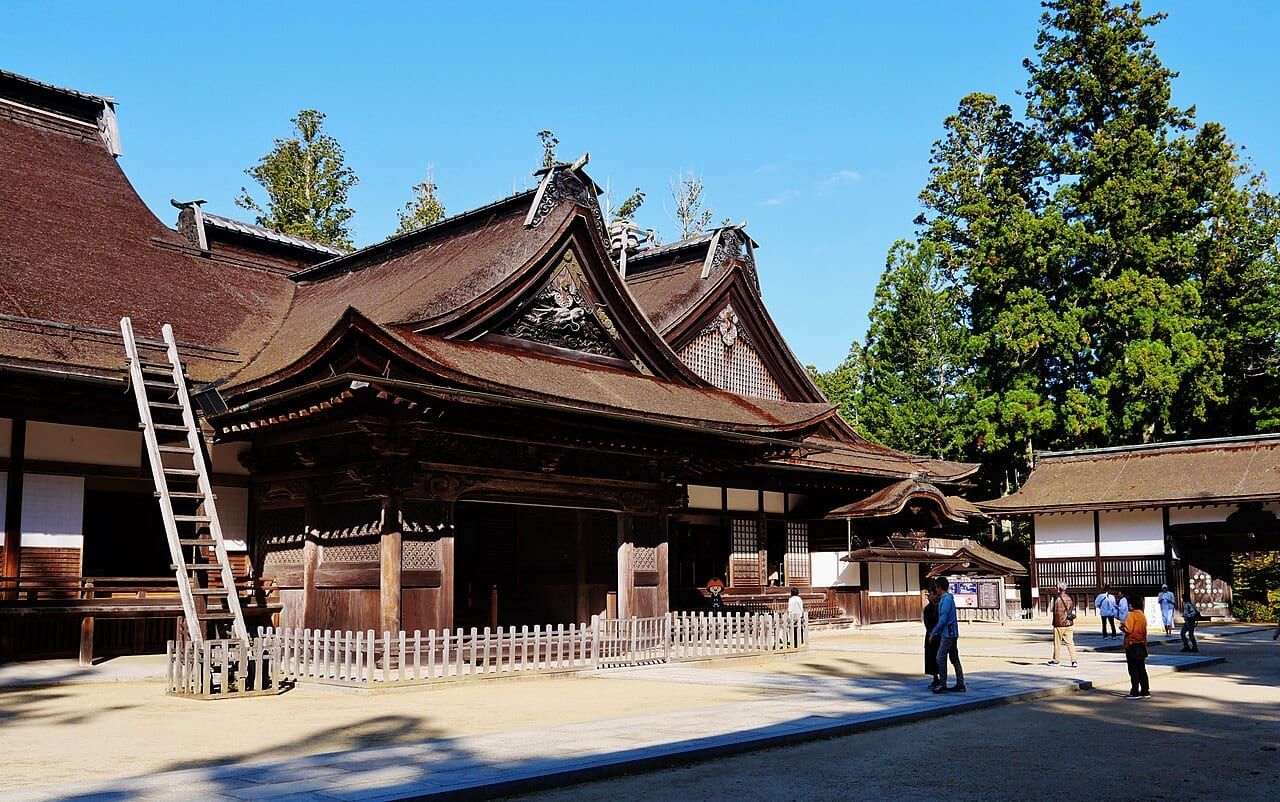
Kongobu-ji is the head temple of the Koyasan Shingon sect: it runs the religious affairs of all of Koyasan and is the residence of the chief abbot (zasu). The present temple began in 1593 as Seiganji, a family temple that Toyotomi Hideyoshi built for his late mother.
By Alex · Updated 19 Nov 2026

Key points
- It sits at the top of its sect. Kongobu-ji heads the Koyasan Shingon sect and handles religious matters for the whole mountain. The chief abbot, the zasu, lives there.
- The founding date and the building date differ. Its founding is dated to 816, the year Koyasan was founded. The present temple grew from Hideyoshi’s Seiganji of 1593, and its main building is from 1863.
- The rooms hold painted doors and screens. Saito Toshitsu painted pines and cranes, and Kano Tansai willows and herons. In 2020 Senju Hiroshi gave paintings of a cliff and waterfalls to two rooms.
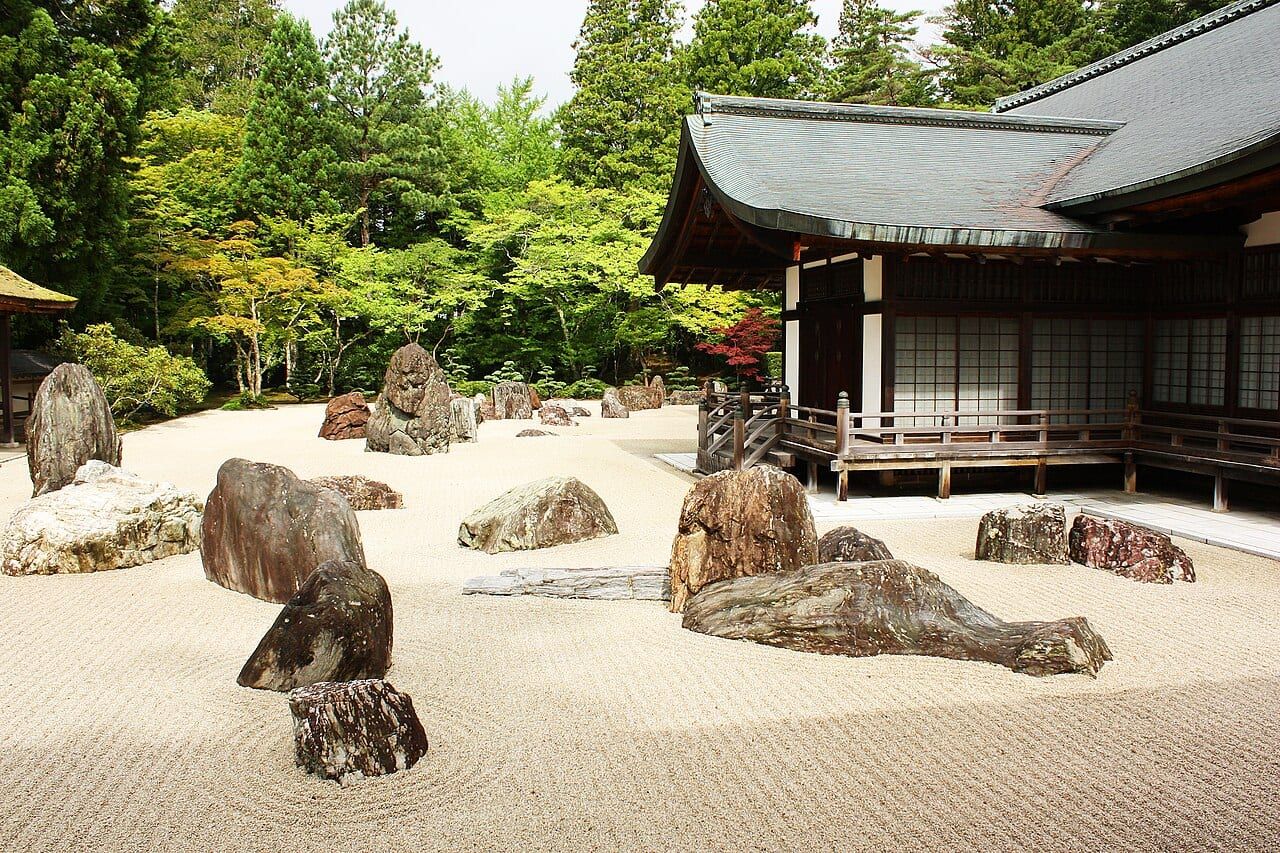
- Banryutei is a dragon garden of stone and sand. The garden spreads over 2,340 square meters. It dates from 1984 and uses sand from Kyoto and stones from Shikoku.
- Open 8:30 am to 5 pm, ¥1,000 to enter. The last entry is at 4:30 pm. Elementary school children pay ¥300 and younger children enter free, by the temple’s official fee list. Kongobuji-mae is the nearest bus stop.
What is Kongobu-ji?
Kongobu-ji is the head temple of the Koyasan Shingon sect, and it runs the religious affairs of all of Koyasan. It is also the residence of the chief abbot, called the zasu.
The Koyasan Shukubo Association calls it the main headquarters of the Shingon sect, which has 4,000 temples throughout Japan and more than 10 million followers worldwide. Koyasan’s sacred complex of 117 temples, with Okunoin and other sites, is today the spiritual and administrative center of that sect.
The name has two meanings. Kukai is said to have taken the name Kongobu-ji from a sutra. Originally it meant the whole of Koyasan; since the Meiji era it has also been the name of one temple.
As a visitor, you can see religious artifacts, shoji screen paintings and a rock garden of two dragons flying among the clouds. If you also want to spend a night on the mountain, start with temple stays in Koyasan.
From Hideyoshi’s Seiganji to Kongobu-ji
Today’s Kongobu-ji took shape when Seiganji, the temple Toyotomi Hideyoshi built in 1593 for his late mother, merged with the neighboring Kozanji and was renamed. Seiganji stood near the center of the mountain, on the site where Kukai’s nephew Shinzen had lived.
Seiganji’s first abbot was the monk Ogo (Mokujiki Ogo), who negotiated peace with Hideyoshi for Koyasan and won his trust.
The older founding date
The founding of Koyasan in 816, when Emperor Saga granted Kukai (Kobo Daishi) permission, also marks the founding of Kongobu-ji. Kukai entered Nirvana on March 21, 835, at the age of 62.
A rice story about Hideyoshi
A Koyasan saying tells of a visit Hideyoshi made to pray for his mother. There was no rice mortar on the mountain, so the abbot cut grains of rice in two with a knife. When Hideyoshi asked why, the abbot answered with a pun that pleased him.

Inside the main building: halls and painted rooms
Inside the main building (shuden) are the Ohiroma, or great hall, and several rooms with painted doors and screens. The building measures about 60 m east to west and 70 m north to south.
It has burned several times, and the present one dates from 1863. Buckets of rainwater, called tensui-oke, stand on its cypress-bark roof against fire. Its great entrance was used only by emperors, the imperial family and Koyasan’s highest officials.
Shojoshin-in says its own buildings keep the architectural style said to have been the model for Kongobu-ji, including a kitchen with a traditional Koyasan cauldron.
The Ohiroma and the Ume-no-ma
The Ohiroma is where important ceremonies are held. Its sliding doors are painted with pines and cranes by Saito Toshitsu. Behind it is a room with a hidden seated statue of Kobo Daishi made in 1680.
The Ume-no-ma has paintings by the same artist. In 2020 the painter Senju Hiroshi gave screen and door paintings of a cliff and waterfalls to two rooms.
The Yanagi-no-ma
The Yanagi-no-ma is painted with willows and herons by Kano Tansai. It is also called the room where Toyotomi Hidetsugu took his own life. Hideyoshi’s nephew and adopted heir fell from favor, fled to Koyasan and was forced to kill himself here in 1595, at 28. The building itself is a later reconstruction.
The Banryutei rock garden
Banryutei is a rock garden of 2,340 square meters, one of the largest rock gardens in Japan. White sand from Kyoto stands for a sea of clouds, and 140 blue granite stones from Shikoku, Kukai’s birthplace, form a pair of dragons.
The garden was made in 1984, for the 1,150th anniversary of Kukai’s entering eternal meditation.
Ceremonies and events at Kongobu-ji
These events in the Koyasan Shukubo Association’s calendar take place at Kongobu-ji or in front of it:
- Joraku-e (Nehan-e): from 10 pm on February 14 to 11 am on February 15.
- Koya Fire Festival: the first Sunday of March, from 12:30 pm, in the square in front of the temple.
- Bussho-e, for the Buddha’s birthday: April 8, from 9 am.
- Spring Kechien Kanjo: May 3-5, from 8:30 am.
- Floats and street stalls: the evening of June 14, in front of the temple.
Kechien Kanjo
Kechien Kanjo is open to anyone. It has been one of Koyasan’s strictest rituals since the Heian period. You throw a flower onto a mandala to form a bond with a Buddha, and water is poured on your head.
It is held twice a year, in spring and in autumn. The autumn date is not given in the sources this guide used.
Getting there, tickets and opening hours
The nearest bus stop is Kongobuji-mae, on the line from Koyasan Station toward Okunoin-mae. The Koyasan Digital Museum is right by the stop; entry is free, and its VR theater costs 1,000 yen.
Measured in a straight line on OpenStreetMap, Kongobu-ji is about 350 m from the Konpon Daito in the Danjo Garan. It is about 1.1 km from Ichi-no-hashi, the start of the Okunoin path. These are not walking distances, and the sources give no walking times. For more sights on the mountain, see Koyasan’s other temples, museums and experiences.
Tickets
Nankai’s World Heritage Ticket includes a discount coupon for admission at Kongobu-ji, and at the Kondo, the Konpon Daito and the Reihokan.
Opening hours and admission
Kongobu-ji’s official fee list (checked on November 12, 2026) gives these hours and prices:
| Place | Adults (junior high and up) | Children | Hours (last entry) |
|---|---|---|---|
| Kongobu-ji | ¥1,000 | ¥300 elementary; under school age free | 8:30 am to 5 pm (4:30 pm) |
| Kondo (Danjo Garan) | ¥500 | elementary and younger free | 8:30 am to 5 pm (4:30 pm) |
| Konpon Daito (Danjo Garan) | ¥500 | elementary and younger free | 8:30 am to 5 pm (4:30 pm) |
| Tokugawa Mausoleum | ¥200 | elementary and younger free | 9 am to 4:30 pm (4:10 pm) |
| Jukai precept ceremony | ¥1,000 | — | at 9, 10 and 11 am and 1, 2, 3 and 4 pm |
A combined ticket for all five costs ¥2,500 for junior high students and up. The four halls alone add up to ¥2,200, so the combined ticket saves money only if you also take the ¥1,000 Jukai ceremony. Groups of 20 or more get a discount, and visitors who show a disability certificate enter free with one companion (the Jukai ceremony excepted).
Hours can change around New Year, and the temple publishes a separate year-end list. Source: Kongobu-ji official fee list (in Japanese).
With a guide
If you want Kongobu-ji and the Danjo Garan explained, GetYourGuide sells a 2.5-hour private tour with a temple-certified guide who lives on Koyasan, from about $235 for a group of up to 5 (read on November 19, 2026). It includes pickup within Koyasan and the transport between the two sites, but not the entrance fees. Other guided options are on the Koyasan tours page.
Is Kongobu-ji worth your time?
It is worth your time if you care about Koyasan’s history, painted rooms or rock gardens; the table shows what to see for each interest.
| Your interest | What to see | Why |
|---|---|---|
| Shingon Buddhism | The head temple itself | It runs the religious affairs of all of Koyasan |
| Hideyoshi’s family story | Yanagi-no-ma | Called the room where Toyotomi Hidetsugu took his own life |
| Painted doors | Ohiroma and Ume-no-ma | Pines and cranes in the Ohiroma; both rooms painted by Saito Toshitsu |
| Contemporary painting | The two rooms with Senju Hiroshi’s paintings | A cliff and waterfalls, given in 2020 |
| Rock gardens | Banryutei | 2,340 square meters; 140 granite stones form two dragons |
| A guided visit | A private tour with a resident guide | Kongobu-ji and the Danjo Garan in 2.5 hours |
How this guide was researched
This page is built from two Koyasan associations, the Koya Tourism Association and the Koyasan Shukubo Association, plus the official websites of three temples, the Nankai railway and OpenStreetMap. In total, 10 sources were read. Distances come from OpenStreetMap as straight lines; every other fact comes from the official sources.
FAQ
Who built Kongobu-ji?
Toyotomi Hideyoshi built its forerunner, Seiganji, in 1593 for his late mother; it later merged with Kozanji and was renamed Kongobu-ji. The temple’s founding, though, is dated to 816, when Emperor Saga granted Kukai permission and Koyasan was founded.
How big is the Banryutei rock garden?
Banryutei covers 2,340 square meters and is one of the largest rock gardens in Japan. Its 140 blue granite stones come from Shikoku, and its white sand comes from Kyoto.
What happened in the Yanagi-no-ma?
It is called the room where Toyotomi Hidetsugu, Hideyoshi’s nephew and adopted heir, took his own life. He fell from favor, fled to Koyasan and was forced to kill himself there in 1595, at 28. The building you see is a later reconstruction.
Is Kongobu-ji included in the World Heritage Ticket?
Yes, as a discount: Nankai’s World Heritage Ticket includes a discount coupon for admission at Kongobu-ji. Full admission is ¥1,000 for adults, by the temple’s official fee list.
How do you get to Kongobu-ji by bus?
Take the line from Koyasan Station toward Okunoin-mae and get off at Kongobuji-mae, the nearest stop. The Koyasan Digital Museum is right by that stop. Fares and timetables are not given in the sources this guide used.
What are the opening hours of Kongobu-ji?
Kongobu-ji is open from 8:30 am to 5 pm, with the last entry at 4:30 pm, and admission is ¥1,000 for junior high students and older. The Kondo and the Konpon Daito keep the same hours; the Tokugawa Mausoleum opens 9 am to 4:30 pm. Hours can change around New Year.
Can anyone take part in Kechien Kanjo?
Yes. Kechien Kanjo is open to anyone, and the spring session listed for Kongobu-ji runs May 3-5, from 8:30 am. You throw a flower onto a mandala to form a bond with a Buddha, and water is poured on your head.
Sources
- Koya Tourism Association (koya.org)
- Koyasan Shukubo Association (eng-shukubo.net)
- Rengejo-in official website (rengejoin.jp)
- Shojoshin-in official website (shojoshinin.jp)
- Nankai Electric Railway (nankai.co.jp)
- Fukuchi-in official website (fukuchiin.com)
- OpenStreetMap