Saizen-in Temple, Koyasan: Shigemori gardens, rooms and how to book
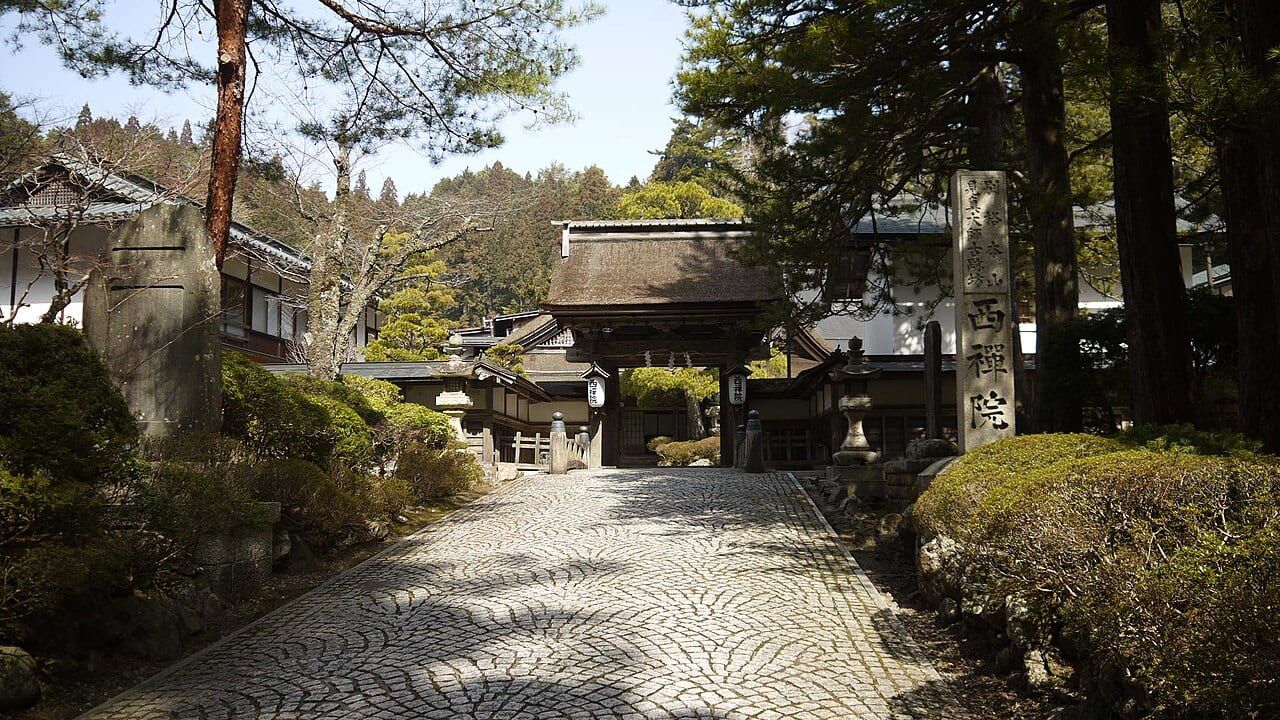
Saizen-in is a temple lodging, or shukubo, at 154 Koyasan in Wakayama, next to the Danjo Garan. It has three gardens designed by Shigemori Mirei and a place in the story of Shinran, who, according to tradition, trained here for 100 days in 1235.
Overnight guests can join sutra copying, ajikan meditation, prayer-bead making and monk-guided tours of Koyasan.
By Alex · Updated 19 Nov 2026

Key points
- Saizen-in is a temple lodging beside the Danjo Garan. It has the status of a bekkaku honzan, a special head temple of Koyasan.
- Its history reaches back to the Heian period. Jakumyu Ajari opened it soon after Kobo Daishi founded Koyasan, and tradition says Shinran trained here for 100 days in 1235.
- Shigemori Mirei designed its three gardens. Water runs from one garden into the next, and the gardens were registered as a Monument of Japan in 2010.
- Some experiences are kept for people who stay the night. Sutra copying, ajikan, prayer-bead making and monk-led tours of Koyasan are for overnight guests only.
- You can book through the temple or through booking sites. On the temple’s own booking site, a night with two shojin meals starts at ¥12,000 per person with two in a room.
What kind of temple is Saizen-in?
Saizen-in (西禅院) is a shukubo, a temple where you can stay the night, and it is a special head temple (bekkaku honzan) of Koyasan. Its address is 154 Koyasan, Koya-cho, Ito-gun, Wakayama.
Besides hosting guests, the temple performs memorial services for ancestors, and for pets that lived like family. If you are still choosing where to stay, you can compare all 36 temples.
Shinran and the history of Saizen-in
Saizen-in dates from the Heian period, and tradition ties it to Shinran Shonin, founder of the Jodo Shinshu sect. Jakumyu Ajari opened it soon after Kobo Daishi founded Koyasan, on high ground near the Danjo Garan. Kakuban Shonin, founder of the Shingi Shingon sect, trained under him.
According to tradition, Shinran climbed Koyasan in the spring of 1235, at about 63, and trained for 100 days at Saizen-in before its Amida Nyorai. A figure of Shinran said to be his own work stands in the main hall. The temple says his memorial in Okunoin once drew more visitors than Kobo Daishi’s mausoleum.
The Shigemori Mirei gardens
Saizen-in has three gardens designed by Shigemori Mirei in the Showa period. Each one represents the abundant waters of Koyasan, and the water flows from one garden into the next. In 2010 the gardens were registered as a Monument of Japan.
Rooms and meals
The room count differs by source, and the meals use traditional methods and seasonal ingredients.
Rooms
The temple’s site says it has 15 guest rooms. The association’s Japanese page lists 16 rooms with walls and 2 divided by fusuma, plus a large and a medium hall, for about 50 individual guests (60 in groups); it also speaks of some 20 rooms large and small.
Saizen-in has ties to Konosuke Matsushita, and guests who wish can stay in the room where he stayed. Facilities include a main hall, a tea room and Western-style toilets.
Bath and toilet
The temple has a large shared bath. Its booking site names two kinds of room with their own bath and toilet: a 60-square-meter suite on the second floor and Special Room A (8 tatami with an anteroom) on the ground floor. Trip.com also lists a “Deluxe Japanese-Style Room With Private Bathroom”.
Meals
Expect the classic sesame tofu and Koya-tofu, plus local food in season. The temple’s site adds that the meal goes well with sake.
Activities for overnight guests
Overnight guests, and only overnight guests, can join sutra copying, ajikan (Esoteric meditation), prayer-bead making and tours of Koyasan guided by a monk. The temple’s booking site has the details.
For sights beyond the temple, see what to do in Koyasan.
Where Saizen-in is and how to get there
Saizen-in stands next to the Danjo Garan, and you get there by bus.
Location
From the temple, the Daito pagoda, the Kondo and the Miedo are visible through the trees. The Danjo Garan is one of the most important places in Koyasan, a religious precinct of many religious and historical monuments.
Saizen-in is about 1,460 m in a straight line from Ichi-no-hashi, the first bridge and the start of the path through Okunoin, measured from its position on Trip.com’s map to Ichi-no-hashi on OpenStreetMap. That is a straight-line figure, not a walking distance.
By bus
The temple’s directions list two bus options:
- From the Koyasan-ekimae stop in front of Koyasan Station, take a bus to the Senjuinbashi stop, then walk about 10 minutes.
- Take bus line No. 31 toward Daimon-minami parking and get off at the Kondo-mae stop, then walk about 3 minutes.
Those walking times are from the temple’s English website. For the trip to Koyasan Station itself, see how to get to Koyasan.
Prices, times and where to book
You can book Saizen-in through the temple or several booking sites. The temple’s own booking site (checked on November 19, 2026) gives the prices and times below.
Prices
With dinner and breakfast, per person with two in a room, plans start at ¥12,000 for the basic shojin plan, from ¥13,100 for a plan with sutra copying, and from ¥15,000 for a plan with a guided walk through the Danjo Garan with a monk. Larger rooms cost more, and prices change by date.
Check-in, dinner and morning service
Check-in is from 3 pm and check-out by 10 am. Dinner is served at 5 pm or 5:30 pm, and you choose one of the two. The morning service in the main hall starts at 6:30 am: about 20 minutes of chanting and a short talk of about 15 minutes, open to all guests. The booking site does not give a curfew.
The temple association has no English page for Saizen-in. No source gives reviews or ratings either, so this page repeats none.
Where to book
Saizen-in is listed on Booking.com, Trip.com, Agoda and Rakuten Travel, and it also has its own booking system. If Saizen-in does not suit your trip, compare all 36 temples instead.
Is Saizen-in a good fit for you?
Saizen-in fits you if you come for gardens, Shinran or a family trip, but not if you want its activities on a day visit.
| Your situation | Good fit? | Why |
|---|---|---|
| You care about garden design | Yes | Three Shigemori Mirei gardens, registered as a Monument of Japan in 2010 |
| Shinran is part of your reason to visit | Yes | Tradition says he trained here for 100 days |
| You are traveling as a family | Yes | Often used for family trips as well as pilgrimages |
| You need a private bathroom | Yes, in two room types | The suite and Special Room A have their own bath and toilet |
| You are only visiting for the day | No, for activities | Sutra copying, ajikan and other activities are for overnight guests only |
How this guide was researched
The sources were the temple’s official website, the Koyasan Shukubo Association’s pages and its reservation site, booking-partner listings, and map positions from Trip.com and OpenStreetMap for the straight-line distance. Seven sources were read in all. Where sources disagree, as on the room count, each figure is given.
FAQ
How much does a night at Saizen-in cost?
On the temple’s own booking site, a night with dinner and breakfast starts at ¥12,000 per person with two in a room. Plans with sutra copying or a guided walk with a monk cost more, and so do the suite and the special rooms.
Can I stay in Konosuke Matsushita’s room?
Yes. If you wish, you can stay in the room where Konosuke Matsushita stayed, as the temple has ties to him. The sources do not say what that room costs or how to request it.
Do families stay at Saizen-in?
Yes. Saizen-in is often used for family trips as well as pilgrimages.
Is there parking at Saizen-in?
Yes. There is parking for 2 buses and 10 cars. The sources do not say whether a space must be reserved.
Does Saizen-in have internet?
Yes. Internet is among the facilities listed for Saizen-in.
How do I change or cancel a booking at Saizen-in?
Saizen-in has changed its own booking system. For new bookings, the confirmation email explains changes and cancellations. No source gives the terms themselves, and the plan pages on the temple’s booking site did not show them either (checked on November 19, 2026), so ask the temple before you book if your dates may change.
Sources
- Saizen-in official website (koya.or.jp)
- Koyasan Shukubo Association, Japanese site (shukubo.net)
- Koyasan Shukubo Association (eng-shukubo.net)
- Koyasan Shukubo Association reservation site (koyasan-shukubo.net)
- OpenStreetMap
- Booking.com
- Trip.com
- Agoda
- Rakuten Travel