Kukai (Kobo Daishi), Shingon Buddhism and the history of Koyasan
Kobo Daishi is the posthumous name of Kukai, the priest who founded Koyasan twelve centuries ago for the study and practice of Esoteric Buddhism. Koyasan is still an active monastic center and the headquarters of the Koyasan sect of Shingon Buddhism, a faith with a wide following throughout Japan.
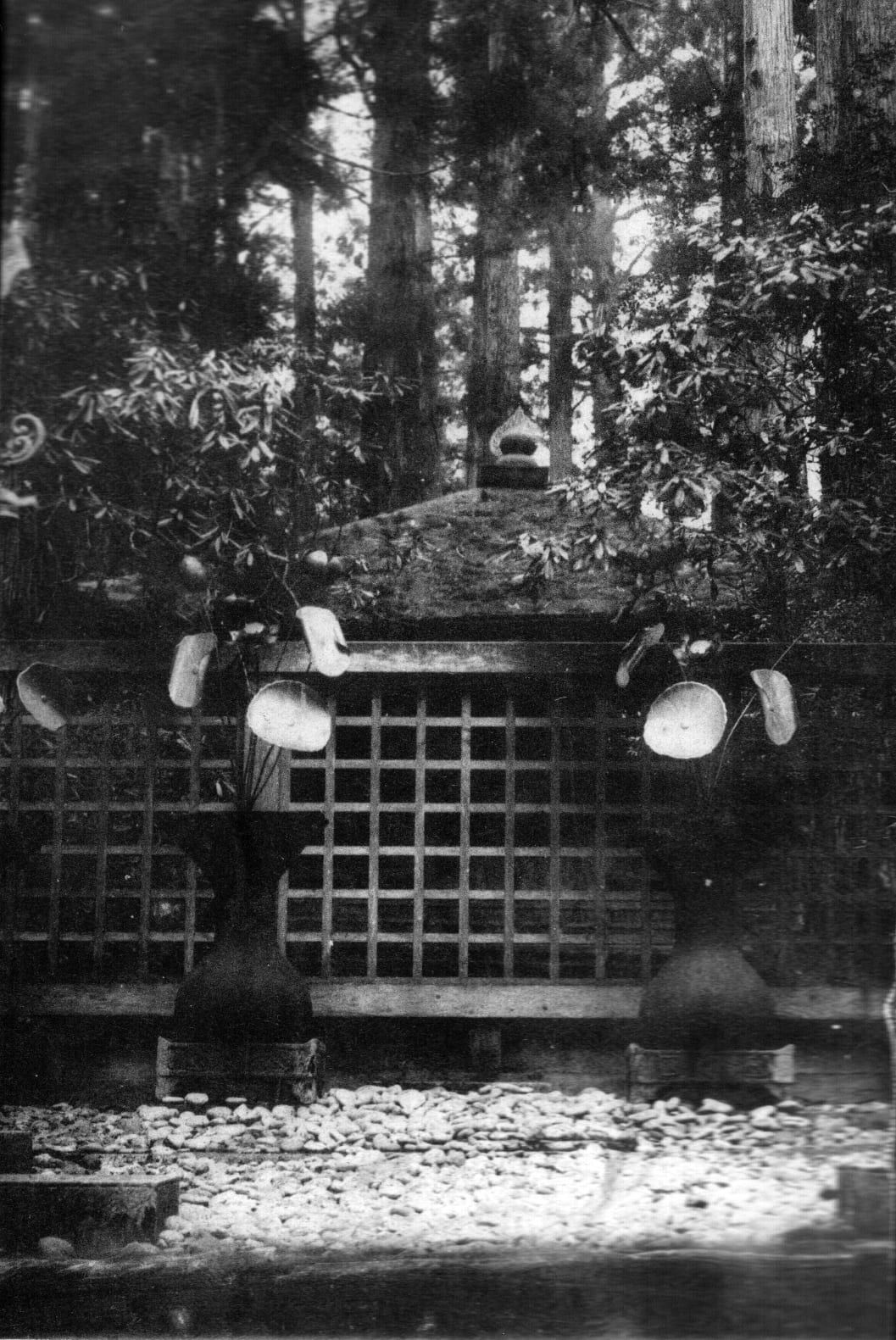
Kukai was born on Shikoku, studied in China and began building on the mountain in 816. He entered Nirvana in 835, at the age of 62, and his mausoleum stands at the far end of Okunoin.
By Alex · Updated 12 Nov 2026

Key points
- Kukai and Kobo Daishi are one person. Kobo Daishi is the posthumous title the emperor gave Kukai in 921, 86 years after his death; “Odaishi-sama” is an affectionate name for him.
- He learned Esoteric Buddhism in China. He sailed there in 804 and came home in 806 as the Eighth Patriarch of Esoteric Buddhism.
- Koyasan was founded in 816. That year Emperor Saga approved a monastic complex on the mountain, and Kukai went up to begin building it.
- He entered Nirvana in 835, aged 62. His mausoleum at the far end of Okunoin is the holiest place of the Daishi faith.
- Today Koyasan is the center of Shingon. Its 117 temples serve as the sect’s spiritual and administrative hub, and the sect counts more than 10 million followers worldwide.
Who was Kukai (Kobo Daishi)?
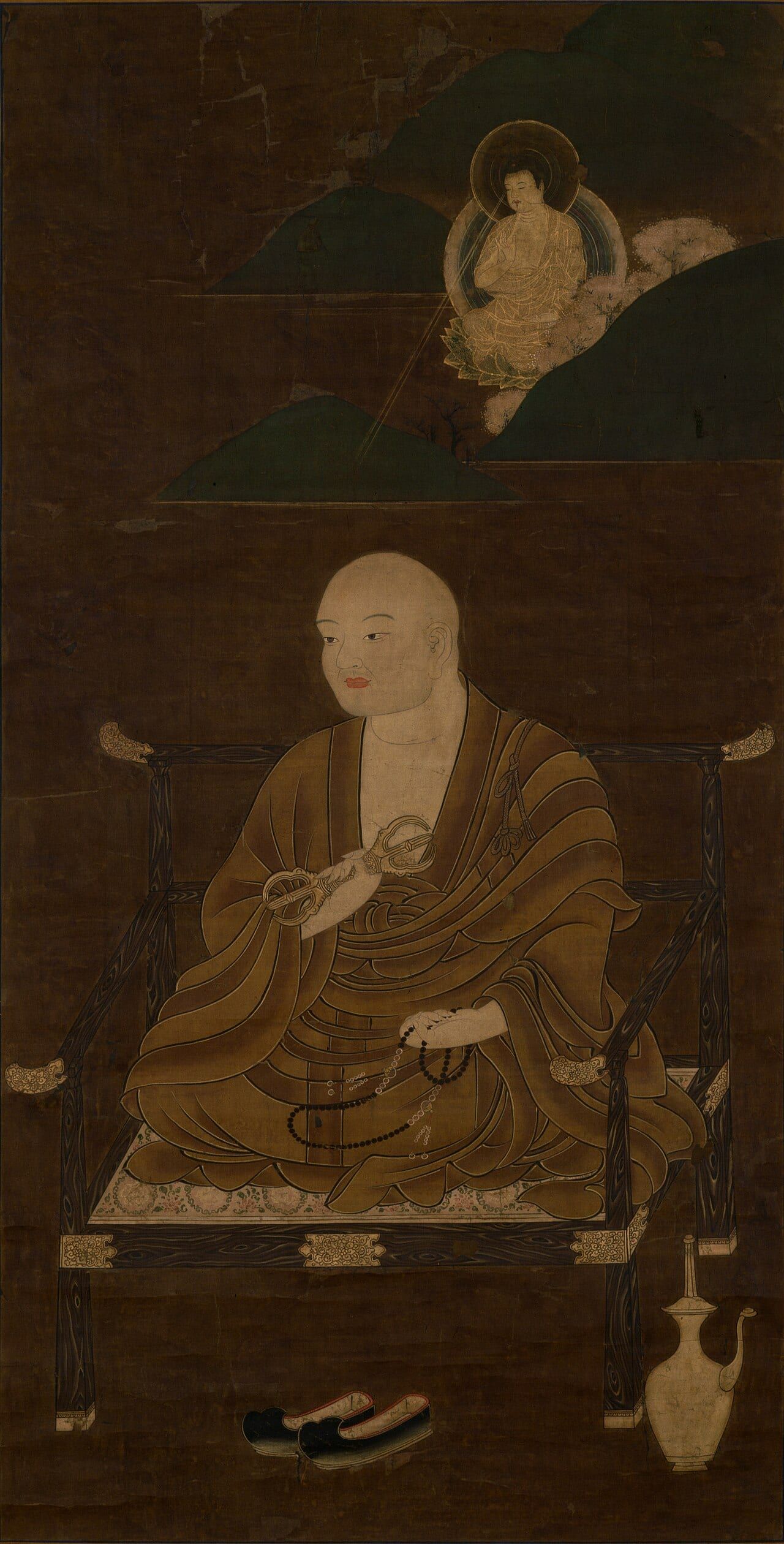
Kukai was a Buddhist priest who mastered orthodox Esoteric Buddhism in China, began spreading it through Japan and founded the monastic complex at Koyasan. After his death he became known as Kobo Daishi, and he is also affectionately called “Odaishi-sama”. All three names point to the same man.
If Kukai is why you are coming, put his mausoleum at the far end of Okunoin on your list: it is the most sacred place of the Daishi faith.
Kukai’s early life and studies
Kukai was born on Shikoku into a devout Buddhist family, studied the Chinese classics at the national college and entered the priesthood at 20. His birthplace was Sanuki province (present-day Kagawa Prefecture), and he was the third son of Saeki-no-Atai-Tagimi and a mother from the Ato clan. Kongobu-ji gives his birth date as the 15th day of the 6th month of 774, at Byobugaura in Sanuki.
Student years
From around the age of 15 he studied history and the Chinese classics and set out for the capital at Kyoto. At 18 he enrolled in the national college, where he studied the Chinese classics and Confucianism in the Faculty of Letters, then called the Myogyo-ka. He is renowned as a composer of Chinese poetry, a skill believed to have developed in these student years.
A change of path
A Buddhist priest gave him a copy of an esoteric scripture, the Kokuzo-Gumonji-no-ho, and it changed his path. Disappointed with an education whose sole aim was training government officials, he left the college, devoted himself to Buddhist asceticism and entered the priesthood at the age of 20.

China, Esoteric Buddhism and the start of Shingon
Kukai mastered orthodox Esoteric Buddhism in China, and after his return the Shingon sect is thought to have been established in 811.
Two years in China
In July 804, at the age of 31, Kukai boarded the first of four ships bound for China on a diplomatic mission to the T’ang court, led by the envoy Fujiwara-no-Kadonomaro. The mission crossed rough seas and reached the capital, Chang-an, at the end of the year.
In China he visited many learned priests, learned about Buddhism and India and studied Sanskrit. Taught by Master Huiguo (Keika-Osyo), he mastered orthodox Esoteric Buddhism and earned the title Ajari-Henjo-Kongo, which marked his appointment as the Eighth Patriarch of Esoteric Buddhism.
Back in Japan
Kukai returned to Japan in 806 and began spreading Esoteric Buddhism through the country. In 811, at Takaosanji Temple in Kyoto (today called Jingoji), he presided over ordination rites for Saicho (posthumously Dengyo Daishi), the leader of the Tendai sect, who in effect became his disciple. The Shingon sect of Buddhism is thought to have been established at this time.
How Kukai founded Koyasan in 816
In 816, with permission from Emperor Saga to establish a monastic complex at Koyasan, Kukai climbed the mountain with followers and laborers and began building a center for Esoteric Buddhism. The event marks the founding of Kongobu-ji.
Kukai built the Konpon Daito, a towering pagoda in the Danjo Garan, as a symbol of Shingon Buddhism. He also built the Kondo, which is actually called the Gyogando or the Yakushido.
Kukai’s other work: Toji, the Manno Reservoir, his writings and a school for everyone
Beyond Koyasan, Kukai repaired the Manno Reservoir, made Kyoto’s Toji Temple a center of Shingon Buddhism, founded an academy open to the general public and wrote a trilogy of Shingon texts.
The Manno Reservoir
In May 821 an imperial order put Kukai in charge of repairing the Manno Reservoir in Sanuki, his home province. He finished the difficult work in 3 months, using civil engineering knowledge he is believed to have gained in China.
Toji Temple in Kyoto
In January 823 an imperial order gave Kukai Kyoto’s Toji Temple, which he made a center of Shingon Buddhism. By imperial decree it could keep 50 disciples, and monks of other sects could not live there.
A school open to the public
In 828 Kukai founded Shugei Shuchi-in, a private academy for Buddhism and Confucianism east of Toji. It was open to the general public regardless of rank or means, but it had to close after only 20 years, for lack of funds and of talented staff.
His writings
His writings include The Transmission of the Dharma (Fuho-den), which traces the lineage of Esoteric Buddhism from the Cosmic Buddha (Dainichi Nyorai) to Huiguo. They also include a trilogy of Shingon texts: The Principles of Attaining Enlightenment in this Existence (Sokushin-jobutsu-gi), The Principles of Sound, Meaning and Reality (Shoji-jisso-gi) and The Principles of the Mantric Syllable (Unji-gi).
Where Kukai rests: the mausoleum at Okunoin
Kukai rests in the Mausoleum of Kobo Daishi, at the far end of Okunoin, in a cave prepared for him. Before entering Nirvana, he chose this spot as his dwelling until attaining Buddhahood. His disciples enshrined his body there “as if it were still living”, built a 5.6-meter-square temple over the cave and never stopped serving his daily meals.
Okunoin itself is a vast cemetery surrounded by a forest of massive cedars, with the mausolea of many famous Japanese, including the samurai ruler Toyotomi Hideyoshi. On March 21, the date of Kukai’s Nirvana in the solar calendar, the Sho-Mie-ku memorial service for Kobo Daishi is held at Okunoin from 9 a.m.
Koyasan after Kukai
After Kukai, his disciple Abbot Shinzen took over the completion of the Koyasan monastery. Kukai had entered Nirvana and attained Buddhahood in this very existence on March 21, 835, at the age of 62, while his monastic center was still being built.
Later builders
The Fudodo was built in 1189 for Hachijoin, the third princess of Emperor Toba. In 1223 Hojo Masako built the Kongo Sanmai-in Tahoto pagoda for the soul of her son, the shogun Minamoto no Sanetomo. In 1643 Iemitsu, the third Tokugawa shogun, built the Tokugawa Mausoleum.
Buildings tied to Kukai
The Miedo, where Kukai recited sutras, enshrines his devotional Buddhist statues and holds his portrait, painted by Shinnyo Shinno, the third prince of Emperor Heizei. The present building is an 1847 reconstruction. The Daishi Kyokai building was constructed in 1924, on the 1,100th anniversary of Kobo Daishi.
Shingon at Koyasan today
Today Koyasan’s sacred complex of 117 temples, with Okunoin and other sites, is the spiritual and administrative center of the Shingon sect. Kongobu-ji is the sect’s main headquarters, and the sect has 4,000 temples throughout Japan and more than 10 million followers worldwide.
Practices you can join
Kukai taught the virtues of hand-copying sutras, holding that those who intently copy the sutra become healthy in mind and body. To try sutra copying, contact the Daishi Kyokai Center.
A Buddhist service is held early every morning at shukubo temples, where the chief priest and monks chant sutras in the main hall. Depending on the temple, it may start at around 6 a.m. If you book one of the temple stays in Koyasan, you may take part or watch.
Ajikan is a form of Shingon meditation for integrating the practitioner with the Buddha. Only a few shukubo temples can offer it to private visitors, so if it is your reason for staying with monks, confirm it with the temple first. For the rest of your visit, see what else to see on the mountain.
Where to follow Kukai’s story at Koyasan
Each row below matches one part of Kukai’s story to the place or date where you can follow it at Koyasan.
| Your interest | Where to go | Why |
|---|---|---|
| Where he rests | Mausoleum of Kobo Daishi, far end of Okunoin | The most sacred place of the Daishi faith |
| A symbol he built | Konpon Daito, in the Danjo Garan | Kukai built the pagoda as a symbol of Shingon Buddhism |
| His portrait | Miedo | Holds his portrait by Shinnyo Shinno; he recited sutras there |
| His birthday | Aoba Matsuri, June 15, Ichi-no-hashi to Daishi Kyokai | A procession led by the Hanamido celebrates his birth |
| His Nirvana | Okunoin, March 21 | Sho-Mie-ku memorial service for Kobo Daishi, from 9 a.m. |
How this guide was researched
This page rests on one kind of source: the official website of the Koyasan Shukubo Association, the temple association. Four pages of that site were read. Where they give no answer, as with the year of Kukai’s birth, the page says so.
FAQ
Is Kukai the same person as Kobo Daishi?
Yes. Kobo Daishi is the name Kukai became known by after his death, so both names refer to the priest who founded Koyasan.
What is Shingon Buddhism?
Shingon is a Buddhist faith with a wide following throughout Japan. The Shingon sect is thought to have been established in 811, after Kukai’s return from China. The sources this guide used do not explain its teaching in more depth, such as its rituals or mandalas.
How old was Kukai when he died?
Kukai was 62 when he entered Nirvana on March 21, 835. His monastic center at Koyasan was still being built at the time. His mausoleum stands at the far end of Okunoin.
When is Kobo Daishi’s birthday festival?
Aoba Matsuri, held every year on June 15, celebrates Kukai’s birth. A morning memorial service is followed by a procession led by the Hanamido, a portable shrine decorated with flowers that holds a newborn Buddha statue. It goes from in front of the Ichi-no-hashi bridge up to the Daishi Kyokai.
Were women always allowed into Koyasan?
No. For centuries women were not allowed to enter Koyasan and were admitted only as far as the Nyonindo, the women’s temple. Kongobu-ji’s chronology dates the end of the ban to 1872 (the temple association’s English page gives 1871).
Is Koyasan part of a UNESCO World Heritage site?
Yes. Koyasan became part of the UNESCO World Heritage site “Sacred Sites and Pilgrimage Routes in the Kii Mountain Range” on July 7, 2004. It is also an important destination for pilgrims returning from the Pilgrimage to the 88 Temples of Shikoku.
Sources
- Koyasan Shukubo Association (eng-shukubo.net)