Best time to visit Koyasan: weather, seasons and festivals month by month
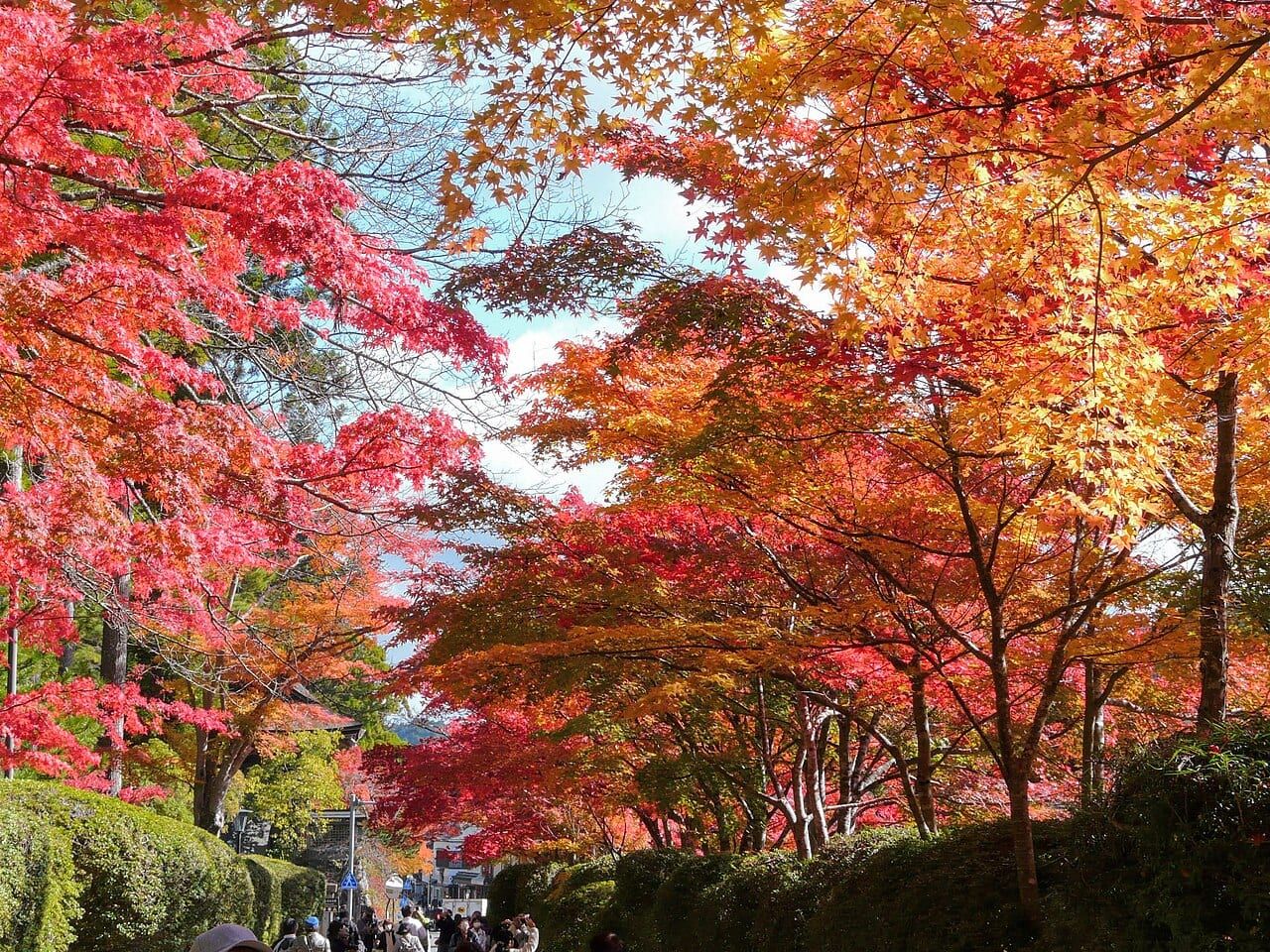
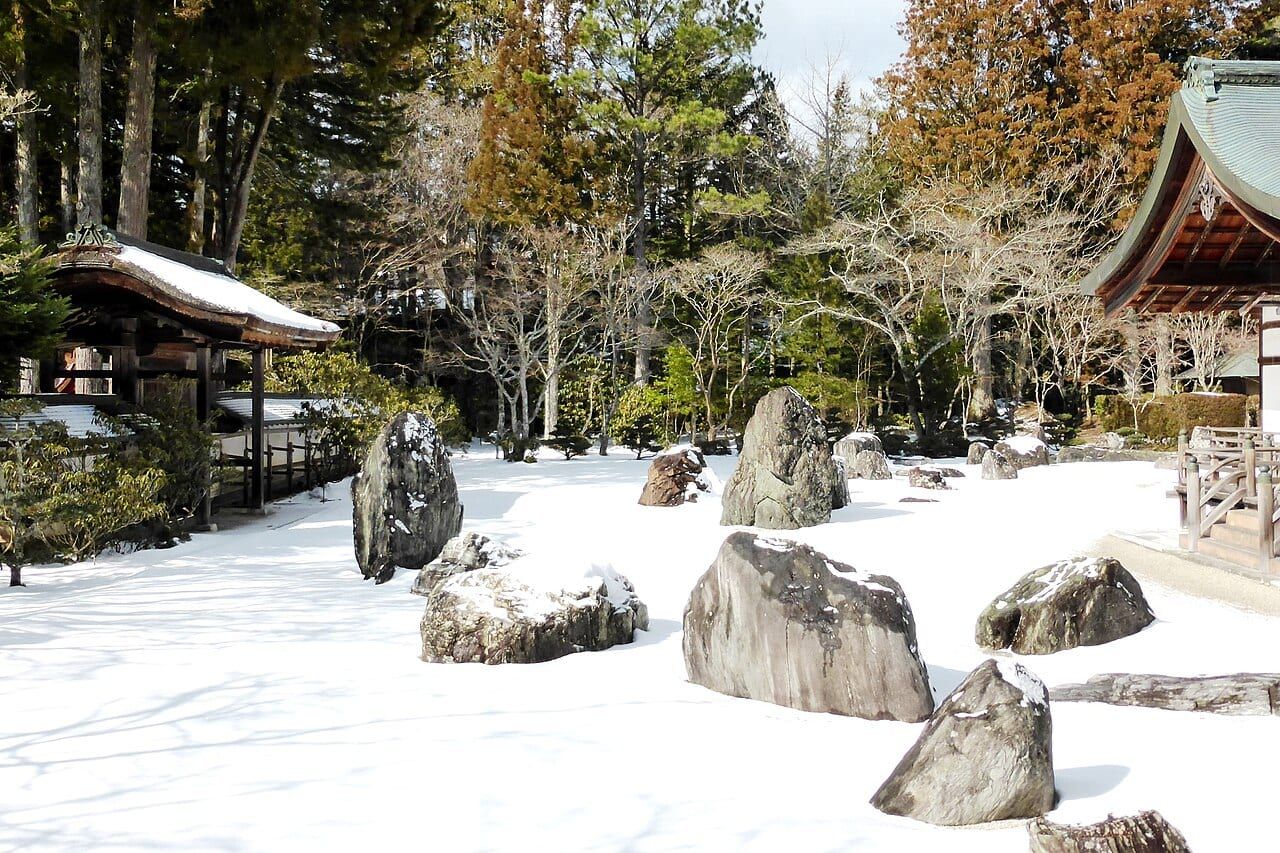
The best time to visit Koyasan depends on what you want to see: cherry blossoms are at their prime from the end of April to early May, and autumn leaves color the mountain in October. Summer offers cooler air than the valley below during the peak tourist season. Snow may arrive in mid-December and usually stays until February.
By Alex · Updated 12 Nov 2026

Key points
- Cherry blossoms come late to the mountain. They open about a month after the trees at the foot of the mountain, and the prime window runs from the end of April into early May.
- October is the month for autumn color. The first frosts follow by early November.
- Summer is cooler than the valley, but busy. The association says the mountain is about 10 degrees cooler, yet August still averages a daily high of 27.8°C (82°F). Schools from around Japan visit in late July and August, and summer is the peak tourist season.
- Winter brings freezing lows, snow and tire rules. January averages a daily low of -4.0°C (25°F), and snow usually lingers until February. From December to March, drivers need studless winter tires or chains.
- Some dates come with their own events. On August 13, candles line both sides of the Okunoin approach for the Candle Festival, and October 1-3 brings the Manto memorial service at Okunoin.
When is the best time to visit Koyasan?
The best time depends on the scenery you want: cherry blossoms are at their prime from the end of April to early May, and the fall foliage colors the mountain in October. These windows suit you if you want to see the mountain in flower or in color.
Summer and winter suit other priorities. Summer brings cooler air than the valley below, but it is the peak tourist season, so skip it if you want to avoid that. Winter brings a chance of snow, but the mountain roads can freeze from December to March, so skip it if you would drive without winter tires or chains.
The sources this guide used do not say how prices for temple stays in Koyasan change by season, so this guide cannot point you to a cheaper month. Choose your dates by weather and events, which the sources do cover.
Koyasan weather month by month
Across the year, the average daily high runs from 3.4°C (38°F) in January to 27.8°C (82°F) in August. The figures below are Japan Meteorological Agency (JMA) averages for 1991-2020 at its Koyasan station: average daily high, average daily low, monthly mean and precipitation.
January to April
- January: high 3.4°C (38°F), low -4.0°C (25°F), mean -0.3°C, precipitation 87.6 mm.
- February: high 4.8°C (41°F), low -3.8°C (25°F), mean 0.4°C, precipitation 97.4 mm.
- March: high 9.2°C (49°F), low -1.0°C (30°F), mean 4.0°C, precipitation 141.7 mm.
- April: high 15.1°C (59°F), low 3.7°C (39°F), mean 9.4°C, precipitation 141.5 mm.
May to August
- May: high 20.1°C (68°F), low 8.9°C (48°F), mean 14.4°C, precipitation 166.6 mm.
- June: high 22.8°C (73°F), low 14.0°C (57°F), mean 18.1°C, precipitation 260.3 mm.
- July: high 26.6°C (80°F), low 18.4°C (65°F), mean 22.1°C, precipitation 256.4 mm.
- August: high 27.8°C (82°F), low 18.8°C (66°F), mean 22.8°C, precipitation 192.5 mm.
September to December
- September: high 23.7°C (75°F), low 15.3°C (60°F), mean 19.1°C, precipitation 247.5 mm.
- October: high 17.8°C (64°F), low 9.1°C (48°F), mean 13.2°C, precipitation 203.3 mm.
- November: high 12.2°C (54°F), low 3.0°C (37°F), mean 7.5°C, precipitation 108.4 mm.
- December: high 6.3°C (43°F), low -1.6°C (29°F), mean 2.2°C, precipitation 89.3 mm.

Spring: late cherry blossoms
Cherry blossoms on Koyasan open about a month later than at the foot of the mountain, because the season climbs the mountain slowly. Prime viewing is from the end of April to early May, and rhododendrons follow as the cherries fade.
Spring suits you if blossoms are the reason for your trip and your dates can move to the end of April. If you can only travel in early April, note that the prime window on the mountain starts later. For ideas beyond the blossoms, see things to do in Koyasan.
Summer: cool air and the peak season
Summer on Koyasan is cooler than the valley below, and it is also the peak season for tourists. The Koyasan Shukubo Association puts the difference at about 10 degrees. Schools from around Japan visit in late July and August.
Summer suits you if cooler mountain air matters more to you than a quiet town. Skip late July and August if you would rather not share the town with school visits. No source this guide used gives crowd levels for the other months.
Autumn: leaves and first frosts
The fall foliage colors Koyasan in October, and the first frosts come by early November. You can feel autumn coming from the middle of August.
Autumn suits you if the leaves are the point of your trip and you can travel in October. If you can only come in September, you will be there before the October foliage.
Winter: snow, cold and road conditions
Winter on Koyasan brings snow, below-freezing average lows and tire rules for drivers. Visitors in mid-December may see the first snowfall, and the snow usually stays until February. The weather normals on this page have no snowfall or snow-depth data, so this guide cannot say how much falls.
Average daily lows stay below freezing from December to March, while average daily highs stay above freezing in every month.
Ichijo-in warns drivers that from December to March the mountain roads can freeze or get heavy snow, and that studless winter tires or chains are required. For route options, see how to get to Koyasan.
Winter suits you if you want a chance of snow. If you plan to drive, skip December to March unless your car has studless winter tires or chains.
Festivals and events through the year
The Koya Tourism Association’s yearly calendar lists events in almost every month. The best known are:
- January 1-3: New Year services at Okunoin.
- February 3: Setsubun prayers at the Daito.
- The first Sunday of March: the Koya Fire Festival, from 12:30 pm in front of Kongobuji.
- April 8: the Buddha’s birthday at Kongobuji.
- May 3-5 and October 1-3: Kechien Kanjo, the initiation ceremony open to anyone, in the Kondo.
- June 15: Aoba Matsuri, for Kukai’s birthday.
- August 13: the Candle Festival along the Okunoin approach.
- October 1-3: the Manto memorial service at Okunoin, from 7 pm.
- October 24-25 in 2026: the Vetro Montagna classic car event.
On the 20th of most months there is also an evening walk to Okunoin at 7 pm, run by the Koya Tourism Association. The association cancelled the walk on October 20, 2026, after several bears were seen in Koya town the evening before, and said it will decide case by case; check its site before you go.
The New Year services, the Candle Festival and the Manto memorial service take place at Okunoin or along its approach. An event day suits you if you want to see a service or a festival, not just the temples. The sources do not say how busy these days get.
Which season fits your trip?
Use your main priority to pick a time of year.
| Your priority | When to go | Why |
|---|---|---|
| Cherry blossoms | End of April to early May | Prime viewing, about a month later than the mountain’s foot |
| Autumn leaves | October | The foliage colors the mountain in October; frosts follow by early November |
| Cooler summer air | Summer | About 10 degrees cooler than the valley, says the association |
| Snow | Mid-December to February | First snow may fall mid-December; usually stays until February |
| An evening festival | August 13 | Candle Festival: 6 pm to 9 pm along the Okunoin approach |
| Driving yourself | Outside December to March | Ichijo-in: roads can freeze; winter tires or chains required |
How this guide was researched
This guide draws on climate normals from Japan’s national weather agency, the temple lodging association’s seasonal pages, event calendar and reservation site, the local tourism association and the official websites of four temples. Eight sources were read in total. Where they say nothing, this page tells you so instead of guessing.
FAQ
How much precipitation does Koyasan get in a year?
About 2,003 mm, averaged over 1991-2020 at the Koyasan weather station. The same normals give a yearly mean temperature of 11.1°C.
What is the Koyasan Candle Festival?
The Candle Festival is held on August 13, from 6 pm to 9 pm, when people walk up to the Torodo to console the souls of their ancestors. Kongobu-ji hands out free candles at the Ichi-no-hashi reception tent from 7 pm, and asks visitors not to come in the yukata or nightwear of their temple lodging. They place candles along both sides of the 2 km approach from Ichi-no-hashi, and the service at the Torodo starts at 8 pm. Keep those evening hours in mind if you are choosing between a day trip or overnight.
Does the Okunoin night tour get fully booked?
Yes, often. Eko-in’s site says the Okunoin night tour that meets at Eko-in often gets fully booked from March to November. If your dates fall in those months, book it early.
Which activities depend on the season?
Some activities have seasonal limits. The forest therapy tour runs from May to November, and the Aozora meditation in the West Pagoda runs only in the afternoon from December to March. The Koya Tourism Association’s bicycles are not rented in rain or snow.
Do any temples close in winter?
Yes. Jochi-in closes from December 25 to the end of February, and Fukuchi-in answers the phone only until 5 pm in winter. If you plan one of the temple stays in Koyasan for winter, check your temple’s dates first.
How much does a temple stay cost?
The temple association’s reservation site gives general prices per adult with dinner and breakfast. They are ¥15,000-25,000 with a shared bath and toilet, and ¥20,000-70,000 with a private toilet or bath.
When exactly do the blossoms and leaves appear each year?
The sources this guide used do not give the exact dates of cherry blossoms or autumn leaves in a given year. They give seasonal windows instead, which the spring and autumn sections above set out.
Sources
- Japan Meteorological Agency (JMA), Koyasan station, climate normals 1991-2020
- Koyasan Shukubo Association (eng-shukubo.net)
- Koyasan Shukubo Association reservation site (koyasan-shukubo.net)
- Ichijo-in official website (itijyoin.or.jp)
- Eko-in official website (ekoin.jp)
- Koya Tourism Association (koya.org)
- Jochi-in official website (koyasan-jyochiin.jp)
- Fukuchi-in official website (fukuchiin.com)