Things to do in Koyasan: temples, Okunoin, museums and experiences
Koyasan has three main areas to see, the Danjo Garan, Kongobu-ji and Okunoin; beyond them you can visit the Reihokan museum and stop at places such as the Daimon gate and the Nyonindo.
You can also join scheduled experiences: monk-led meditation on the 20th of each month, a giant-rosary prayer on the 21st, a precepts ceremony and a forest therapy tour.
By Alex · Updated 12 Nov 2026

Key points
- Three main areas form the core of Koyasan. Kukai opened the Danjo Garan for Shingon training, Kongobu-ji is the sect’s head temple, and Okunoin is the heart of faith in Kobo Daishi.
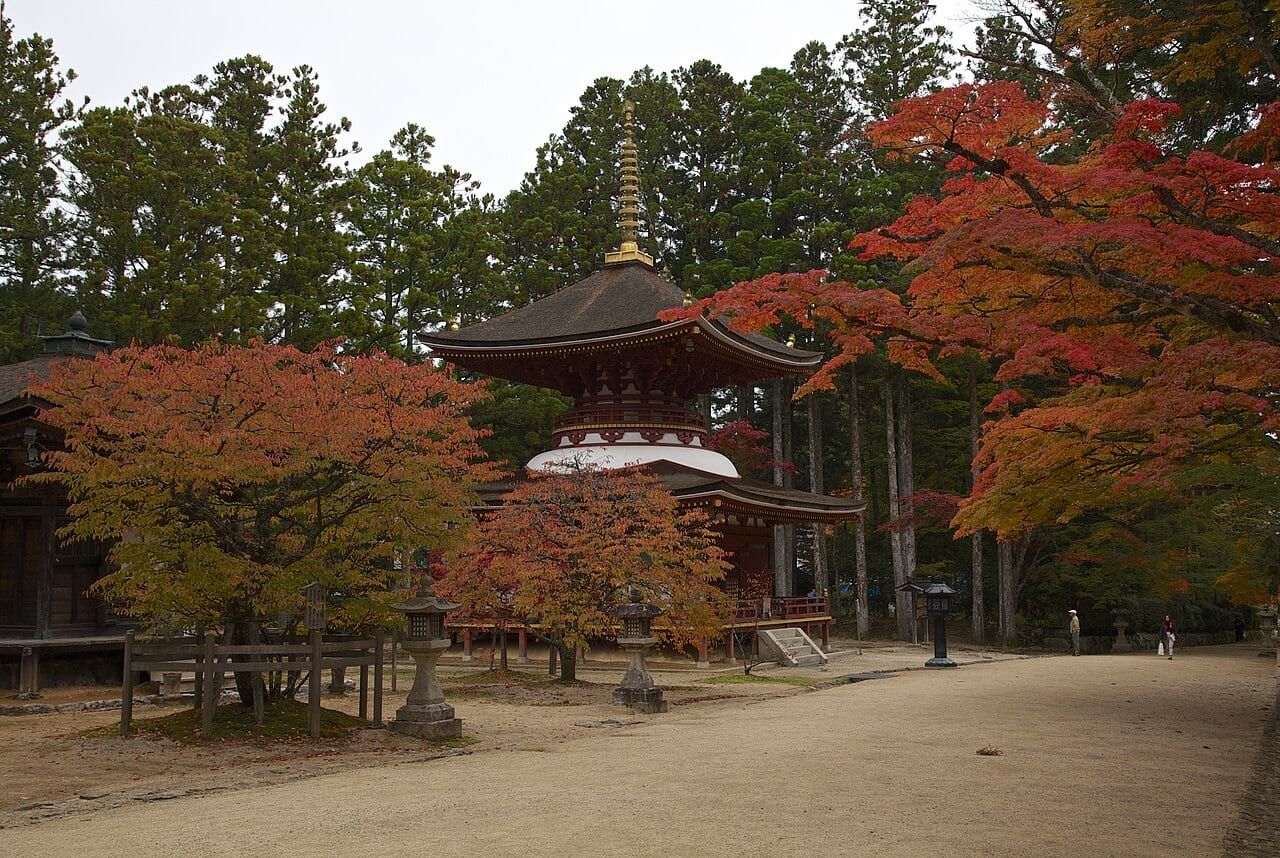
- The Konpon Daito stands for Shingon. Said to be Japan’s first two-story tahoto pagoda, it took about 70 years to complete, and the present tower dates from 1937.
- Kongobu-ji has one of Japan’s largest rock gardens. The Reihokan museum, at 1,300 yen, holds about 100,000 items from Koyasan’s temples.
- Okunoin’s approach runs about 2 km. It is said to pass more than 200,000 memorial towers and graves on the way to Kobo Daishi’s mausoleum.
- Straight-line distances are known; walking times are not. On OpenStreetMap, the Daimon and Ichi-no-hashi are about 2.1 km apart in a straight line.
What are the main sights in Koyasan?
The main sights in Koyasan start with its three main areas: the Danjo Garan, Kongobu-ji and Okunoin. The Danjo Garan is the fundamental training ground of Shingon Esoteric Buddhism, opened by Kukai (Kobo Daishi). Kongobu-ji is the head temple of the Koyasan Shingon sect, where ceremonies are held. Okunoin is the center of faith in Kobo Daishi.
If your time is short, put these three first. If you plan to spend the night, see temple stays in Koyasan.
Danjo Garan: the Kondo, the Konpon Daito and the Miedo
The Danjo Garan is the sacred area Kukai began building first. It holds the Kondo (the main hall of all Koyasan), the Konpon Daito pagoda and the Miedo, where Kukai lived. Over more than 1,200 years, every hall and pagoda here except the Fudodo has burned in forest fires or lightning and been rebuilt.
The Kondo
Kukai built the Kondo in 819 and first called it the Kodo; it has burned seven times, and the present building dates from 1932. Its principal image, Ashuku Nyorai (Yakushi Nyorai by one theory), is a hidden Buddha by Takamura Koun that was first shown to the public in 2015.
The two mandalas hanging inside are replicas of the “blood mandala,” said to have been painted with blood from Taira no Kiyomori’s forehead. The original is in the Reihokan.
The Konpon Daito
The vermilion Konpon Daito is the symbol of Shingon and is said to be the first two-story tahoto pagoda in Japan. Kukai and his successor Shinzen took about 70 years to finish it, around 887; the present tower was rebuilt in 1937 after the fire of 1843.
Inside, a Dainichi Nyorai sits among four Buddhas, and its 16 pillars carry paintings of bodhisattvas by Domoto Insho, so the hall forms a three-dimensional mandala.
The Miedo
The Miedo was built as Kukai’s personal hall and later enshrined his portrait; the present building is from 1847. It normally cannot be entered, but in recent years visitors have been let into its outer sanctuary on the eve of the Kyu-Sho-Mie-ku (the lunar March 21 memorial), after the evening service. Unless your visit falls on that eve, do not count on going in.

Kongobu-ji and the Reihokan museum
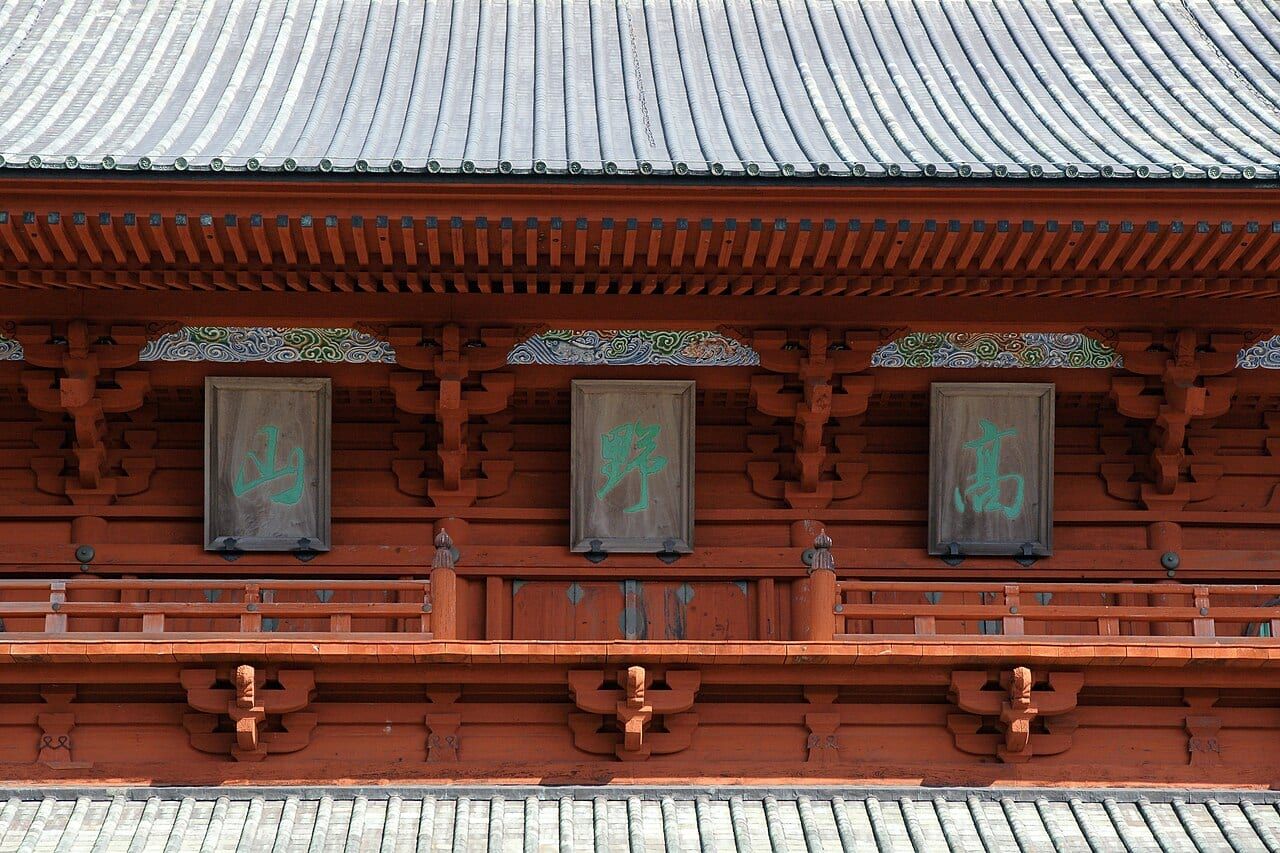
Kongobu-ji has the Banryutei, a rock garden of 2,340 square meters and one of the largest in Japan, while the Koyasan Reihokan shows the treasures of Koyasan’s temples. Toyotomi Hideyoshi built Kongobu-ji’s predecessor in 1593 for his late mother. For more on the temple, see the full Kongobu-ji guide.
The Reihokan
The Reihokan opened in 1921 and keeps about 100,000 Buddhist statues, paintings and other items, among them about 28,000 designated cultural properties, shown in seasonal and special exhibitions.
Admission is 1,300 yen, with student discounts. It closes over the New Year and sometimes between exhibitions, and it is right by the Reihokan-mae bus stop. It suits you if you came for statues and paintings rather than halls.
The Koyasan Digital Museum
The Koyasan Digital Museum, by the Kongobuji-mae bus stop, shows a VR film of the Danjo Garan on a 250-inch screen. Entry is free and the VR theater costs 1,000 yen. It is open 10 am to 5 pm, every day from March to November (the VR theater skips the last Monday of each month), with irregular closing days from December to February.
Okunoin, from Ichi-no-hashi to the mausoleum
In Okunoin, the approach from Ichi-no-hashi to Kobo Daishi’s mausoleum is about 2 km long. It runs under cedars said to be a thousand years old and is said to be lined with more than 200,000 memorial towers and graves of people of every rank and sect.
On August 13, the Candle Festival, people light candles along both sides of the 2 km approach from 7 pm, and a service follows at the Torodo at 8 pm. Okunoin suits you if Kobo Daishi is the reason for your trip; for more, see the Okunoin guide.

The Daimon, the Nyonindo, the Tokugawa Mausoleum and other places
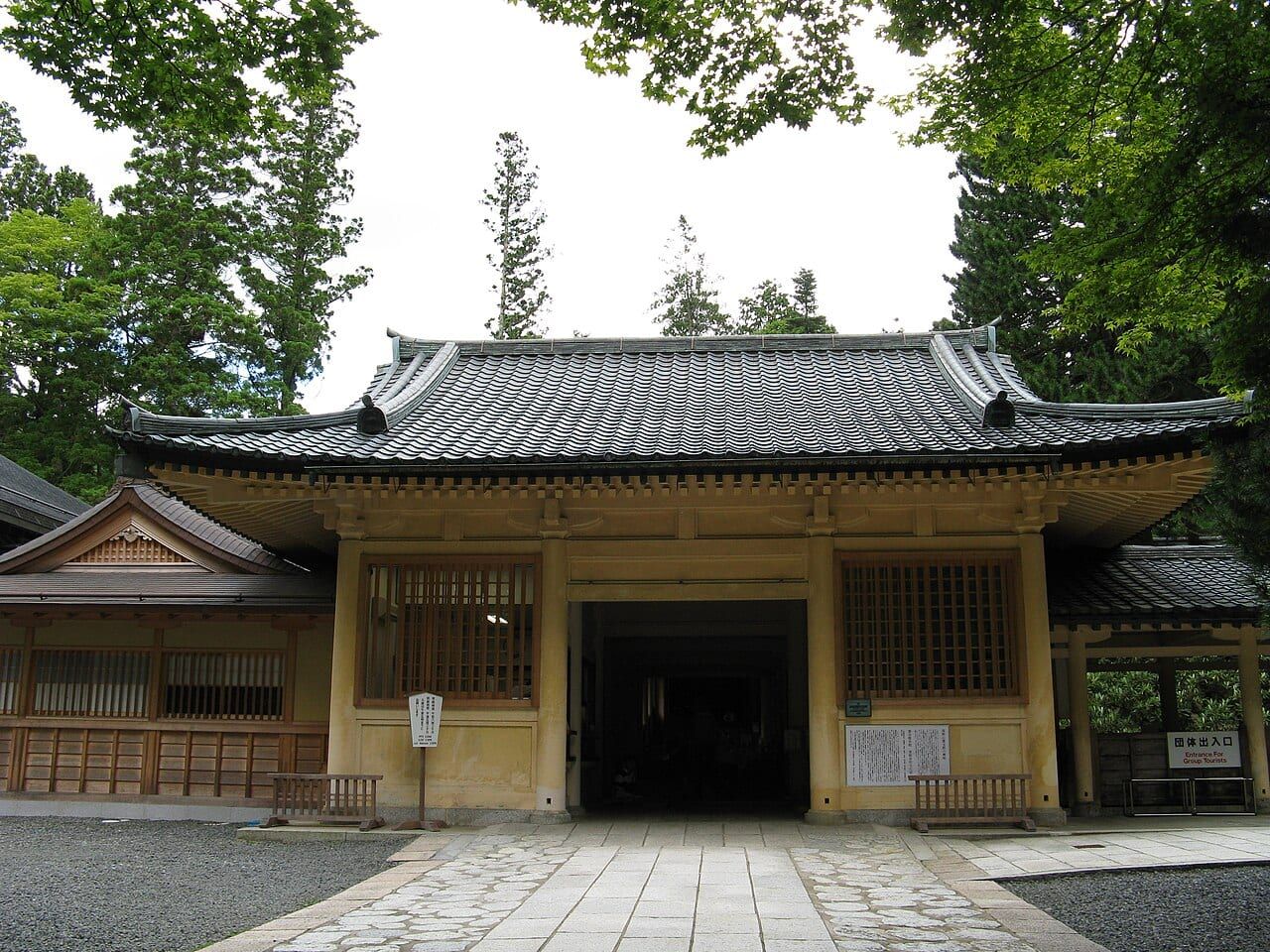
The Daimon is the main gate to the town, the Nyonindo is the women’s temple, and the Tokugawa Mausoleum enshrines Ieyasu and Hidetada.
Until 1872, by Kongobu-ji’s chronology, no women were allowed to enter Koyasan; until then, they could only go to the Nyonindo, where a picture of the first child born on Koyasan can be seen. The Nyonindo suits you if you are interested in how Koyasan once kept women out.
The Tokugawa Mausoleum, near the Nyonindo, was built in 1643 by Iemitsu, the third Tokugawa shogun, over twenty years. It is unfinished wood outside and gold and silver leaf inside, and it is an Important Cultural Property.
The Kongo Sanmai-in Tahoto, a National Treasure, was built in 1223 by Hojo Masako for her son, the shogun Minamoto no Sanetomo, and the temple’s rhododendrons are a designated natural monument.
Experiences: meditation, prayer beads, precepts and forest walks
Experiences you can join in Koyasan include monk-led meditation, a giant-rosary prayer, a precepts ceremony and a forest therapy tour. Meditation needs a visit on the 20th of a month, the rosary prayer one on the 21st.
Aozora meditation, on the 20th
On the 20th of each month, a monk leads meditation inside the Saito (West Pagoda) of the Danjo Garan, which is normally closed to the public. Sessions start at 10:30 am and 1:30 pm (afternoon only from December to March), last about 1 hour and cost 3,500 yen; each takes 10 people, and booking is required.
Ojuzu-kuri, on the 21st
On the 21st of each month at 1 pm, participants sit in a circle in the Daishi Kyokai’s great lecture hall and pass a giant rosary while praying. It costs 1,000 yen, takes about 40 minutes and needs no booking; places go to the first 108 people.
Jukai and the forest therapy tour
At the Jukai-do (precept hall), you can receive ten Buddhist precepts in a 30-minute ceremony for 1,000 yen, at 9, 10 or 11 am or at 1, 2, 3 or 4 pm.
A forest therapy tour runs about once a month from May to November, mostly on Sundays. It covers about 6 hours from the Ichi-no-hashi information center (9:30 am) along Okunoin and into the forest, costs 4,000 yen with lunch and insurance, and takes the first 20 people.
Getting around: distances, rentals, audio guides and tickets
For getting around, the sources cover straight-line distances, rentals, audio guides and a ticket with discount coupons, but give no walking times.
Distances
Measured in a straight line on OpenStreetMap:
- The Daimon to the Konpon Daito: about 650 m
- The Konpon Daito to Kongobu-ji: about 350 m
- Kongobu-ji to Ichi-no-hashi: about 1.1 km
- The Daimon to Ichi-no-hashi: about 2.1 km
Walking routes are longer, and no source this guide used says how long the sights take to see. To weigh a day trip or overnight visit, see that guide.
Rentals and guides
The Koya Tourism Association rents bicycles for 1,000 yen per rental (reception 9:00 am to 4:30 pm, riders 18 and over, not in rain or snow). It also rents small electric cars for 3,000 yen for 3 hours, up to 6 hours a day, to drivers with a license.
Audio guides rent for 500 yen per unit at the Chuo and Ichi-no-hashi offices, 8:30 am to 4:30 pm, and the Koyasan Interpreter Guide Club offers guided tours in English. For more options, see Koyasan tours.
Tickets, fees and hours
Nankai’s World Heritage Ticket includes discount coupons for admission at Kongobu-ji, the Kondo, the Konpon Daito and the Reihokan. No source this guide used gives opening hours for any of the four, or fees for the first three.
What to see first: which fits you?
Start with the place that matches what you came for.
| Your interest | Where to go | Why |
|---|---|---|
| Shingon halls and pagodas | Danjo Garan | Kondo, Konpon Daito and the Miedo, where Kukai lived |
| Buddhist art and treasures | Koyasan Reihokan | About 100,000 items in seasonal and special exhibitions |
| Kobo Daishi and memorials | Okunoin | About 2 km approach to his mausoleum, lined with memorial towers |
| A large rock garden | Kongobu-ji | Banryutei: 2,340 square meters, one of Japan’s largest |
| Meditation with a monk | Saito, Danjo Garan | On the 20th, about 1 hour, booking required |
How this guide was researched
This guide draws on the official sites of the Koya Tourism Association, the Koyasan Shukubo Association and Nankai Electric Railway, plus straight-line distances measured on OpenStreetMap. In total, 9 sources were read.
FAQ
How much is the Reihokan museum?
Admission to the Koyasan Reihokan is 1,300 yen, with student discounts. Nankai’s World Heritage Ticket also includes discount coupons for admission there.
Can you go inside the Konpon Daito?
Yes. Nankai’s World Heritage Ticket includes discount coupons for admission at the Konpon Daito, where a Dainichi Nyorai sits among four Buddhas. Its opening hours and fee are not given by the sources this guide used.
Can you go inside the Miedo?
No, not normally. In recent years, though, visitors have been let into its outer sanctuary on the eve of the Kyu-Sho-Mie-ku, after the evening service.
Can you rent a bike in Koyasan?
Yes. The Koya Tourism Association rents bicycles for 1,000 yen per rental. Riders must be 18 or over, and bikes are not rented in rain or snow.
What are the opening hours of Kongobu-ji?
Kongobu-ji is open from 8:30 am to 5 pm, with the last entry at 4:30 pm, and admission is ¥1,000 for junior high students and older, by the temple’s official fee list. The Kondo and the Konpon Daito in the Danjo Garan keep the same hours at ¥500 each. See the Kongobu-ji guide for the full table.
How far is it from the Daimon to Okunoin?
In a straight line on OpenStreetMap, the Daimon is about 2.1 km from Ichi-no-hashi, and the walking route is longer. From Ichi-no-hashi, the Okunoin approach runs about 2 km to Kobo Daishi’s mausoleum.
Sources
- Koya Tourism Association (koya.org)
- Koyasan Shukubo Association (eng-shukubo.net)
- Nankai Electric Railway (nankai.co.jp)
- OpenStreetMap