Okunoin Cemetery at Koyasan: the walk to Kobo Daishi’s mausoleum
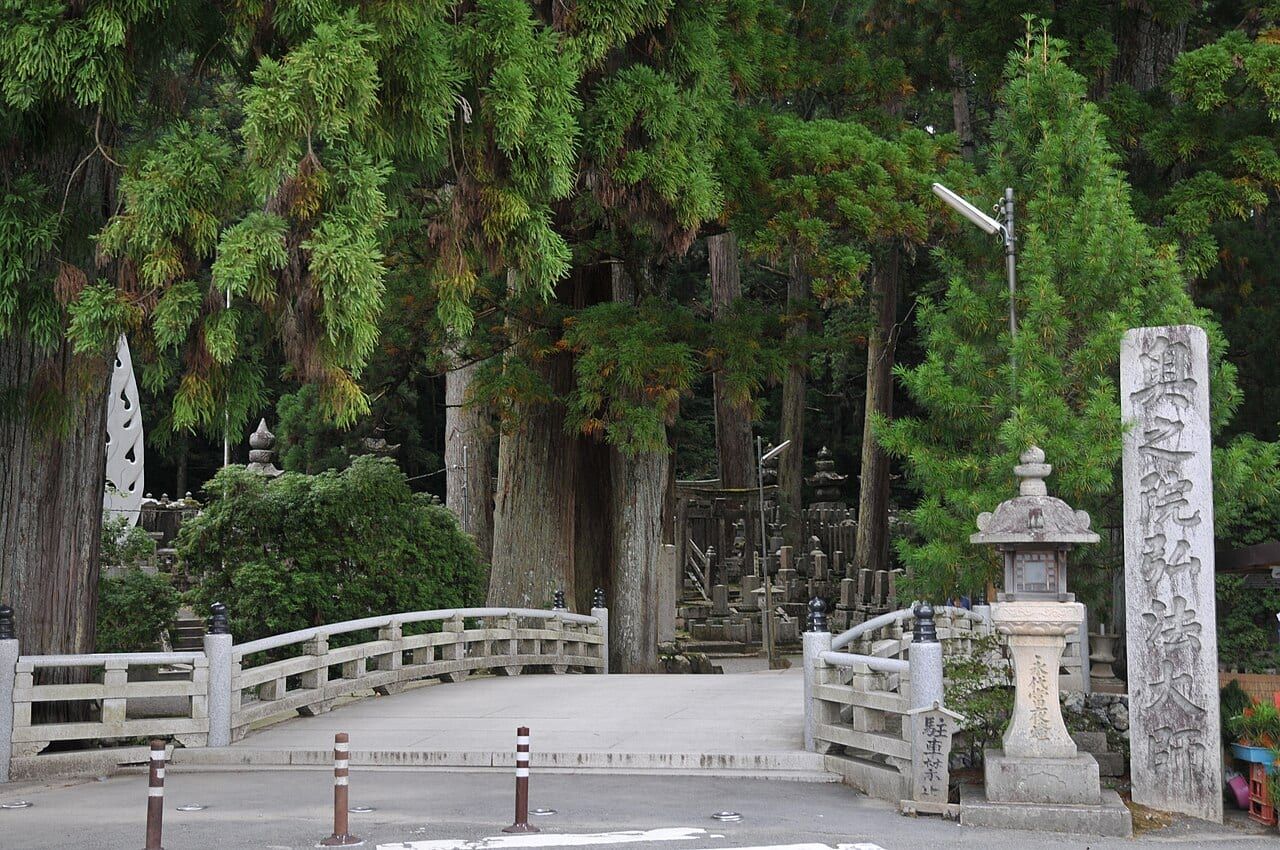
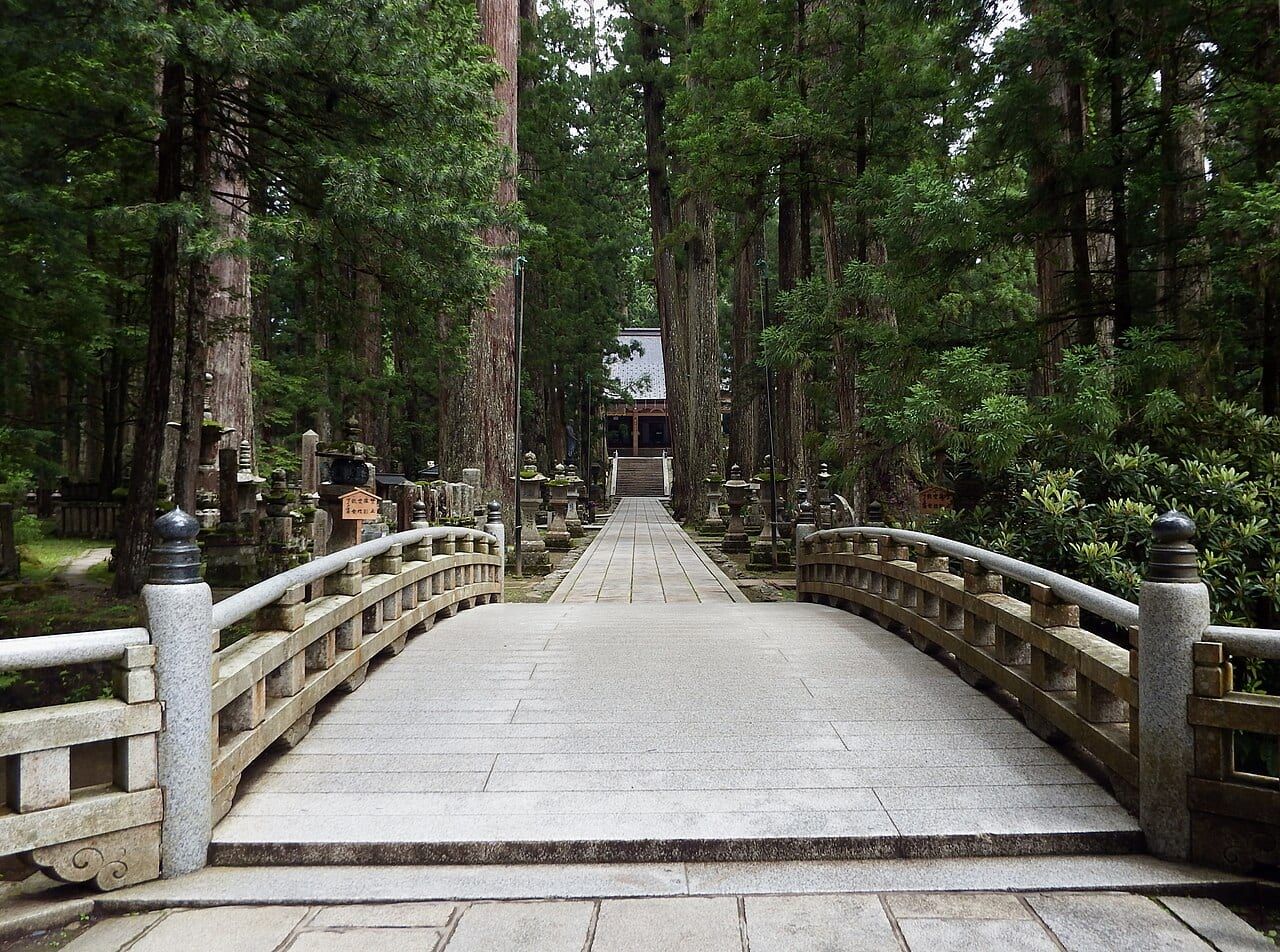
Okunoin is a vast cemetery set in a thick forest of massive cedars, and it is the Inner Sanctuary of Koyasan. A path runs through it from the Ichi-no-hashi bridge to Torodo, the Lantern Hall, and the Mausoleum of Kobo Daishi.
You can walk it on your own, rent the temple association’s audio guide, or book a guided walk on GetYourGuide, including one at dawn and after dark.
By Alex · Updated 19 Nov 2026

Key points
- Okunoin is the Inner Sanctuary of Koyasan. It is a huge graveyard in a cedar forest, holding the mausolea of famous Japanese such as Toyotomi Hideyoshi.
- The approach is about 1.6 km in straight lines. That is the straight-line distance from Ichi-no-hashi to the Lantern Hall, and the path on the ground is longer.
- Two lights at Torodo have burned for one thousand years. One dates from 1016 and one from 1088, and a third, from Emperor Showa, joined them in 1948.
- The mausoleum is the most sacred place of the Daishi faith. It sits on a small plateau ringed by three mountains, with the Tama river below them.
- You can go alone or with a guide. The temple association rents audio guides for ¥500 a unit, and GetYourGuide lists a 2-hour cemetery tour from about $103 per person.
What is Okunoin?
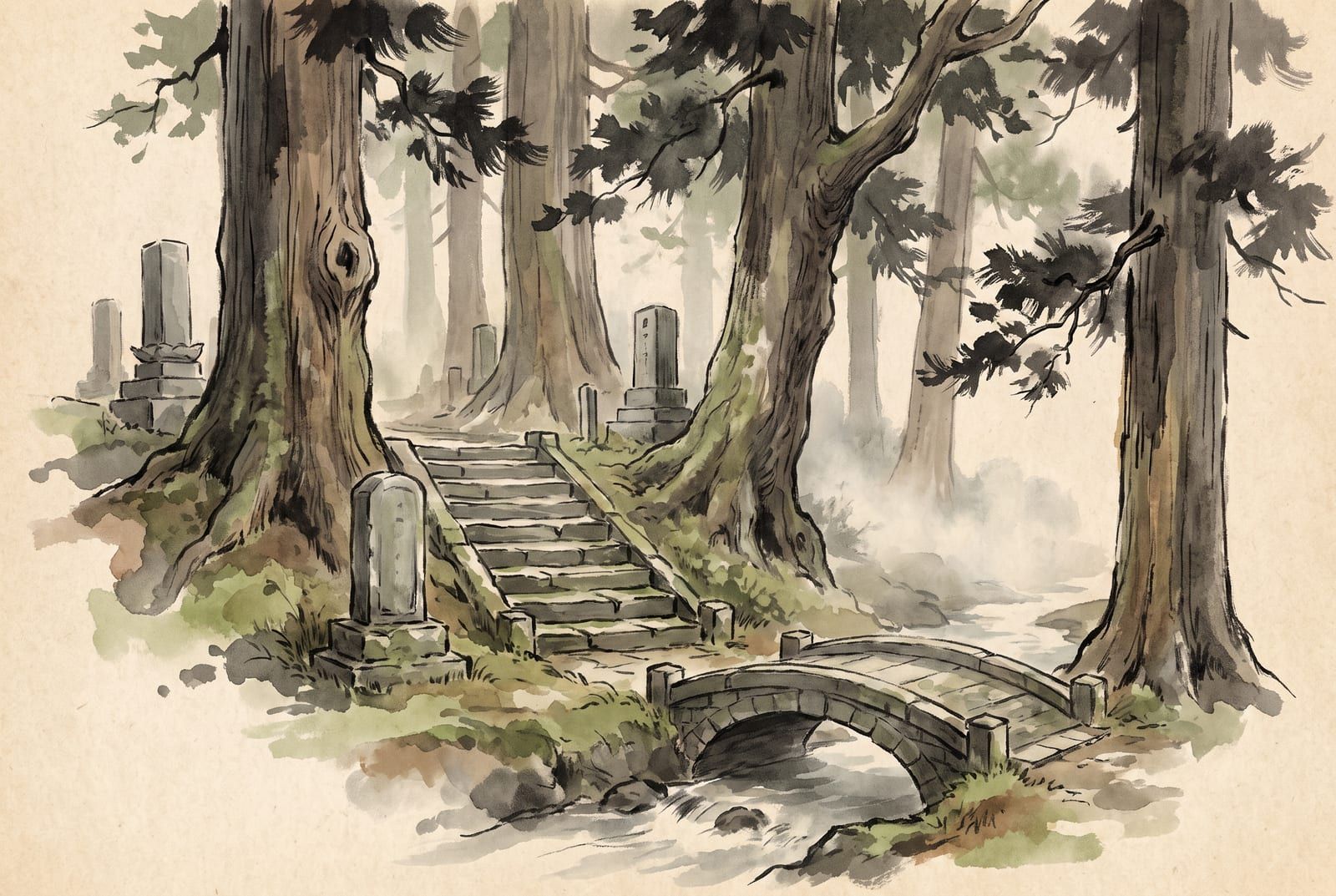
Okunoin is a cemetery and the heart of Koyasan, with its many famous gravesites. The cemetery has the mausolea of many famous Japanese, including the samurai ruler Toyotomi Hideyoshi, and memorials to the spirits of soldiers killed in the Pacific War. The Koya Tourism Association says the approach is lined with more than 200,000 memorial towers and gravestones, of people of every rank and sect.
If this is your first Japanese burial ground, the page on Japanese cemeteries and graves gives wider background. Okunoin is also one of the things to do in Koyasan, so you can plan it around the rest of your visit.
The walk from Ichi-no-hashi to the mausoleum
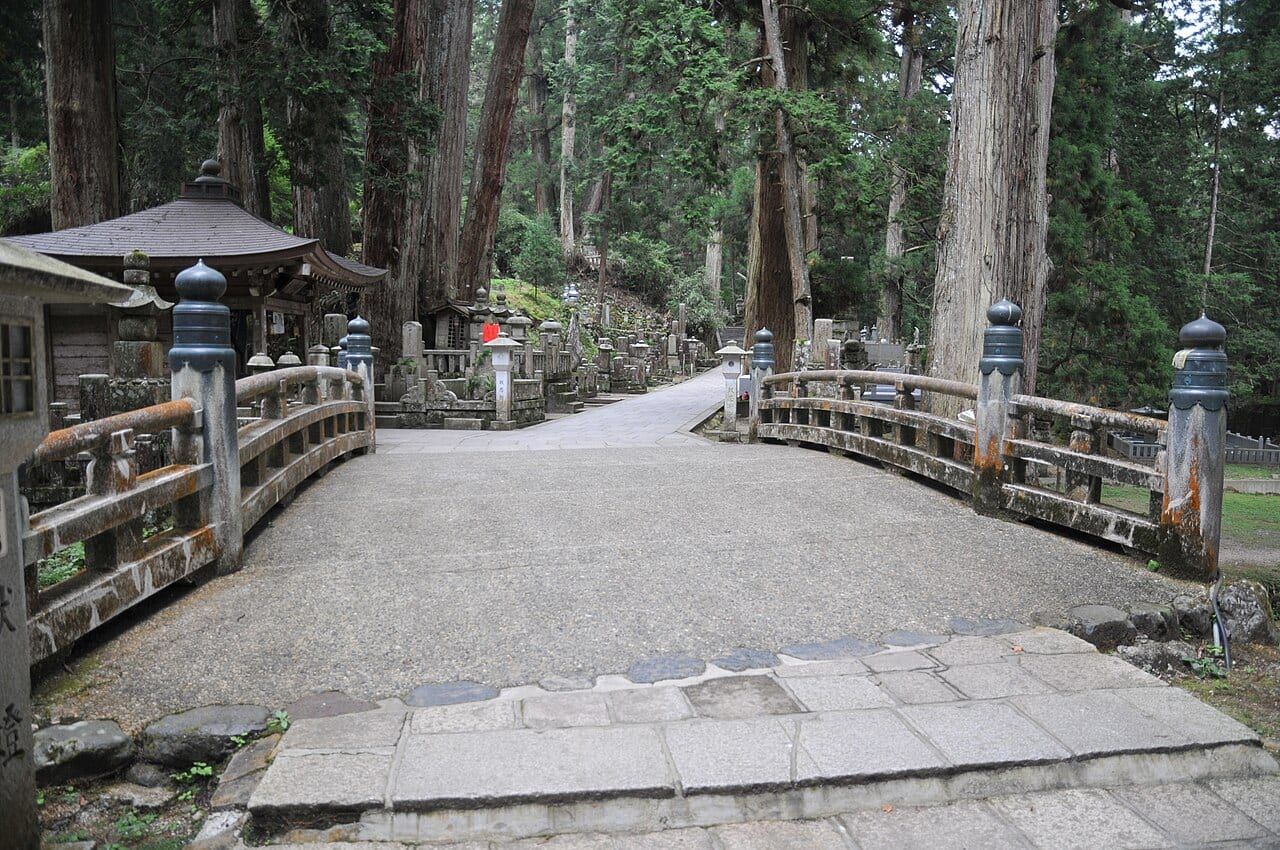
The walk starts at Ichi-no-hashi, the first bridge, and leads past the Nakano-hashi bridge to Gobyo-bashi, the last bridge before the mausoleum. You can do it alone or join one of the Okunoin night tours, which come with a guide.
How far it is
Measured in straight lines between points on OpenStreetMap, it is about 1.6 km from Ichi-no-hashi to Torodo, in three legs:
- Ichi-no-hashi to the Nakano-hashi area: about 810 m
- Nakano-hashi area on to Gobyo-bashi: about 650 m
- Gobyo-bashi to Torodo: about 100 m
The walking path itself is longer than these straight lines: the Koya Tourism Association puts the approach from Ichi-no-hashi to the mausoleum at about 2 km. The sources this guide used give no walking time for it.
Starting from the Okunoin-mae bus stop
Nakano-hashi has an information center and lies next to the Okunoin-mae bus stop. On OpenStreetMap, the Okunoin-mae bus stop is about 110 m from the Nakano-hashi information center. Getting off there puts you partway along the approach instead of at Ichi-no-hashi.

What to look for along the path
Along the path, look for the Kakuban Slope near Nakano-hashi, a monument to Matsuo Basho, Japan’s oldest poem stupa inscribed in hiragana and the talismans in the Tamagawa River.
The Kakuban Slope
The Kakuban Slope is a flight of stone steps very near the Nakano-hashi bridge. Tradition says that anyone who tumbles down them will be dead within three years. The slope has 43 steps because 42 can be read as shi-ni, “a death”, and it is also called the Three-year Slope (San-nen-zaka).
The Basho monument
About halfway between the Nakano-hashi and Gobyo-bashi bridges stands a monument to the haiku poet Matsuo Basho (1644–1694). It was built in October 1775.
The poem stupa after Gobyo-bashi
Once you cross the Gobyo-bashi bridge, look on the right side of the approach for Japan’s oldest poem stupa inscribed in hiragana. It is dated June 1312.
The Tamagawa River
The Tamagawa River flows through the cemetery, and in it you can see wooden talismans placed there by the devout.
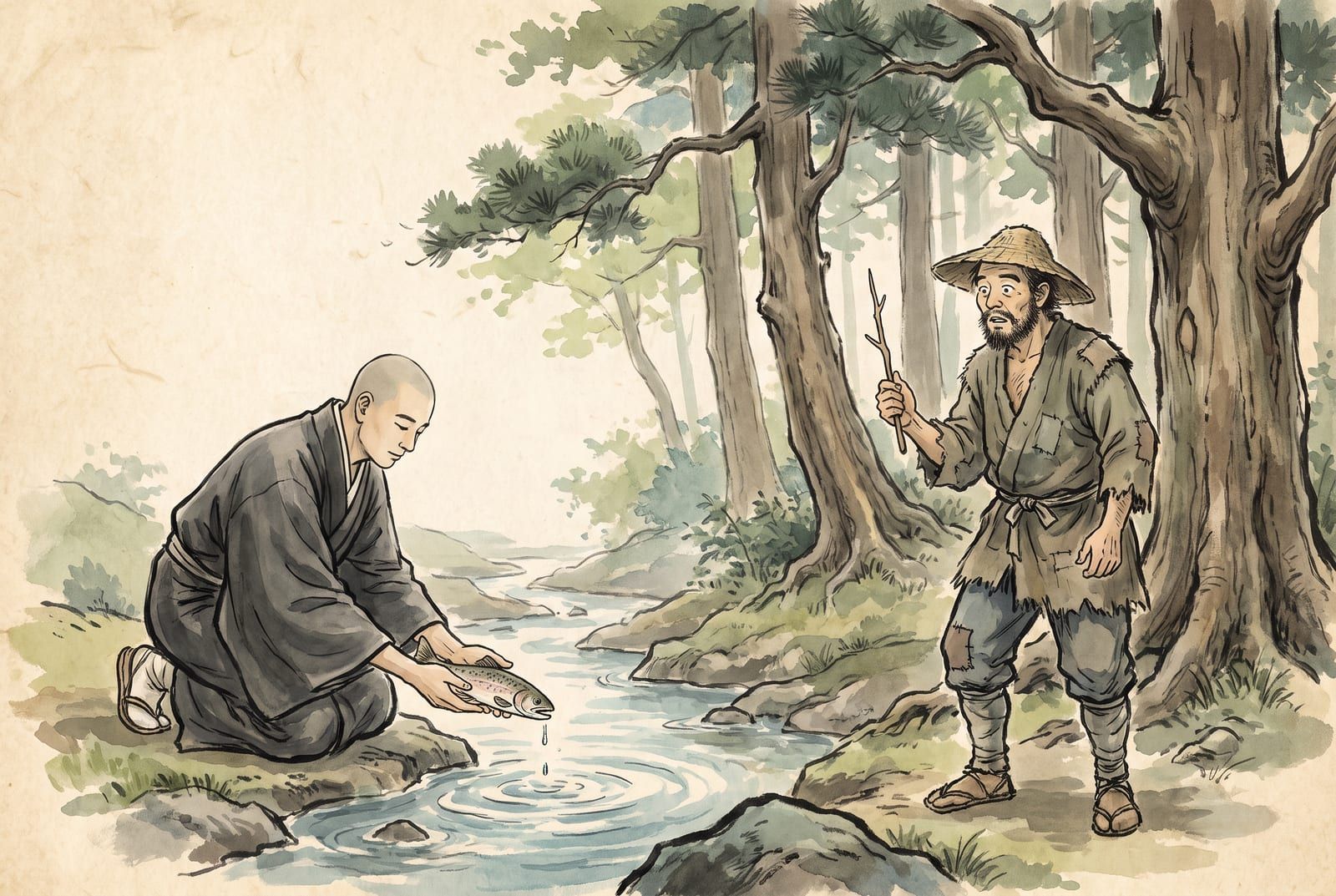
A legend is tied to the river. Kukai bought a small skewered fish from a mountain man and released it, and it swam again. The specks on the fish are said to be the scars of the skewer.
Torodo, the Lantern Hall
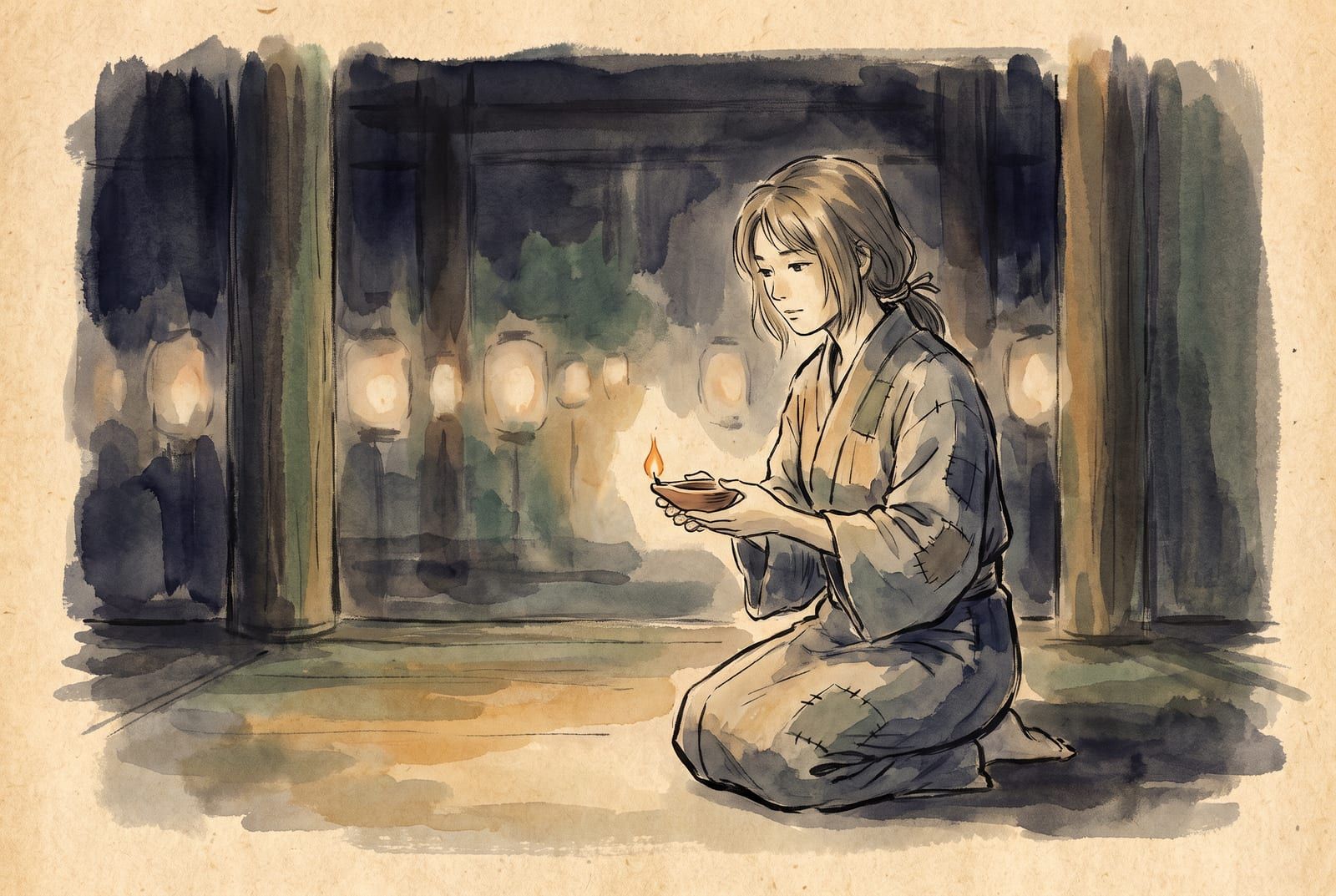
Torodo is the Lantern Hall, and two of the lights inside it have been burning for one thousand years.
The first is the Poor Woman’s Candlelight, offered in 1016 by a woman called Oteru, who offered a lock of her hair for the souls of her parents. The second is the Shirakawa Candlelight: 300,000 candles offered by ex-Emperor Shirakawa in 1088.
In 1948 the Showa Candlelight, offered by Emperor Showa, was added. The three together are called the Everlasting Candlelight (Jomyo-to), and many candles offered by believers from across Japan fill the hall.

The Mausoleum of Kobo Daishi
The Mausoleum of Kobo Daishi is the most sacred place of the Daishi faith. It stands on a small plateau surrounded by three mountains, Tenjiku, Yoryu and Mani, with the Tama river at their foot.
Before entering nirvana, Kukai, known after his death as Kobo Daishi, chose this place as his dwelling until attaining Buddhahood. After he entered nirvana, his disciples enshrined his body in a cave prepared for him. They built a 5.6-meter-square temple over it and never stopped serving his daily meals.
The temple association writes that the mausoleum still seems to speak, through the towering old cedars, to those who pray to Kukai. For more on the man himself, see Kukai and the history of Koyasan.
Okunoin night tours and walks at dawn
You can walk the path all the way to the mausoleum at night, by japan-guide.com, but Torodo and the other halls are closed then: by Kongobu-ji’s official fee list, Torodo opens from 6 am to 5 pm, and entry is free. japan-guide.com also warns that some parts of the path are poorly lit after dark, so bring a light. Photography, food and drink are not allowed beyond the Gobyo-bashi bridge, by night as by day.
If you would rather not walk it alone, you can book guided walks at dawn and after dark.
On GetYourGuide, “Koyasan: Sacred Silence of Okunoin at Dawn and After Dark” is a private guided walk sold from US$107.57 (about $108) per person.
Eko-in’s website describes an Okunoin night tour run by another company, with Eko-in as the meeting place. It is led by a monk or a guide who lives on Mount Koya. From March to November it often gets fully booked, so book it early if you travel in those months.
That company, Awesome Tours, says on its own tour website that guests staying at Renge-in, Sainan-in or Ichijo-in cannot take part, because of those temples’ bath and meal times. Its site also says reception is inside TAIRA, where you get the meeting time and place, and that there is no pickup from your lodging.
All three DeepExperience tours on GetYourGuide, among them the dawn-and-after-dark walk and the 2-hour cemetery tour, require modest clothing because Koyasan is a religious site. Guests in tank tops, camisoles, off-shoulder tops, miniskirts, shorts or yukata cannot join.
These walks suit you if you want a guide at those hours. If you would rather set your own pace, skip them and rent the audio guide below. Compare the options on the Okunoin night tours page.
Audio guide, guided tours and where to stay nearby
You can rent an audio guide, join a guided tour, or sleep at one of several bookable temples close to Ichi-no-hashi.
Renting the audio guide
The association rents audio guides at its offices at Chuo and Ichi-no-hashi: ¥500 per unit, one per person, from 8:30 am to 4:30 pm. Overnight guests may return it the next morning.
It suits you if you want to walk at your own pace. The sources do not say which sights or languages it covers.
Temple stays near Ichi-no-hashi
Measured in a straight line, the bookable temples closest to Ichi-no-hashi, out of the 36 that booking partners sell, are Shojoshin-in (80 m), Hozen-in (90 m), Sekisho-in (150 m), Kumagaiji (160 m), Eko-in (200 m) and Komyo-in (300 m). Map positions come from OpenStreetMap, except for Hozen-in (the Koyasan Shukubo Association’s map) and Kumagaiji (Trip.com’s map).
These suit you if you want to sleep near the start of the walk, and Eko-in is also the meeting place Eko-in’s site gives for the night tour above. You can compare them on the page of temple stays near Okunoin.
Guided tours
The Koyasan Interpreter Guide Club offers guided tours of Koyasan in English. GetYourGuide also sells a 2-hour guided tour of the cemetery from US$102.83 (about $103) per person.
For a family or a small group, GetYourGuide has a private 2-hour walk priced per group, from about $188 for up to 12 people (read on November 19, 2026). It starts at the large map at the Ichi-no-hashi entrance, and on the 9:30 am tour the guide arranges for you to see Shojin-ku, the daily meal offering at Kobo Daishi’s mausoleum. Choose the club if an English-speaking guide matters most to you; more options are on the Koyasan tours page.
How to see Okunoin: which way fits you?
Pick by what matters most to you: your own pace, an English-speaking guide, a walk at dawn or after dark, or a bed near the start.
| Your situation | Best way | Why |
|---|---|---|
| You want to set your own pace | Rent the association’s audio guide | ¥500 per unit; what it covers is not stated |
| You want an English-speaking guide | A Koyasan Interpreter Guide Club tour | It offers guided tours of Koyasan in English |
| You want to walk at dawn and after dark | GetYourGuide’s private guided walk | From US$107.57 (about $108) per person |
| You want a set two-hour tour | GetYourGuide’s 2-hour guided tour | From US$102.83 (about $103) per person |
| You travel March to November and want a night tour | Book the night tour meeting at Eko-in early | It often gets fully booked in those months |
| You want to sleep near the start | A temple near Ichi-no-hashi | Shojoshin-in is 80 m away in a straight line |
How this guide was researched
The facts here come from the temple association’s English site, the Koya Tourism Association, Eko-in’s official website, the night tour organizer’s website, the Visit Koyasan website, OpenStreetMap, Trip.com and GetYourGuide’s listings. In all, 11 sources were read. Distances were measured in straight lines between points, on OpenStreetMap except where a temple’s position comes from another map.
FAQ
How many graves are in Okunoin?
More than 200,000 memorial towers and gravestones, according to the Koya Tourism Association, which says they line the approach of about 2 km from Ichi-no-hashi to Kobo Daishi’s mausoleum. The temple association calls Okunoin “a vast cemetery”.
Who is buried at Okunoin?
Okunoin has the mausolea of many famous Japanese, among them Toyotomi Hideyoshi, and Kobo Daishi’s mausoleum stands at the end of the path. The Tokugawa Mausoleum, built in 1643 by Iemitsu, the third Tokugawa shogun, is not here: it is in Koyasan town and is listed separately among the sights.
Who was Kobo Daishi?
Kobo Daishi is the posthumous name of Kukai, who founded Koyasan in 816 after Emperor Saga gave him permission. He entered nirvana on March 21, 835, at the age of 62. He is also affectionately called “Odaishi-sama”.
Is Koyasan connected to the Shikoku pilgrimage?
Yes. Koyasan is also an important destination for pilgrims returning from the Pilgrimage to the 88 Temples of Shikoku. Kukai was born on Shikoku as well, in Sanuki province, which is present-day Kagawa Prefecture.
Is Koyasan a UNESCO World Heritage site?
Yes. Koyasan became part of the UNESCO World Heritage site “Sacred Sites and Pilgrimage Routes in the Kii Mountain Range” on July 7, 2004.
What are the photo rules at Okunoin?
After you cross the Gobyo-bashi bridge, no photography or recording is permitted, and you are asked to remove your hat, according to the general rules on the Visit Koyasan website. GetYourGuide’s listing for the dawn-and-after-dark walk also says photography and electronic devices are strictly prohibited at Gobyobashi, and the 2-hour tour’s listing does not allow flash photography. The sources this guide used give no photo rules for the rest of the path.
Sources
- Koyasan Shukubo Association (eng-shukubo.net)
- Koya Tourism Association (koya.org)
- OpenStreetMap
- Trip.com
- GetYourGuide
- Eko-in official website (ekoin.jp)
- Koyasan Okunoin night tour official website (www.night.koyasan-okunoin.com)
- Visit Koyasan (koyasan.net)