Komyo-in Temple, Koyasan: rooms, meals and how to book a stay
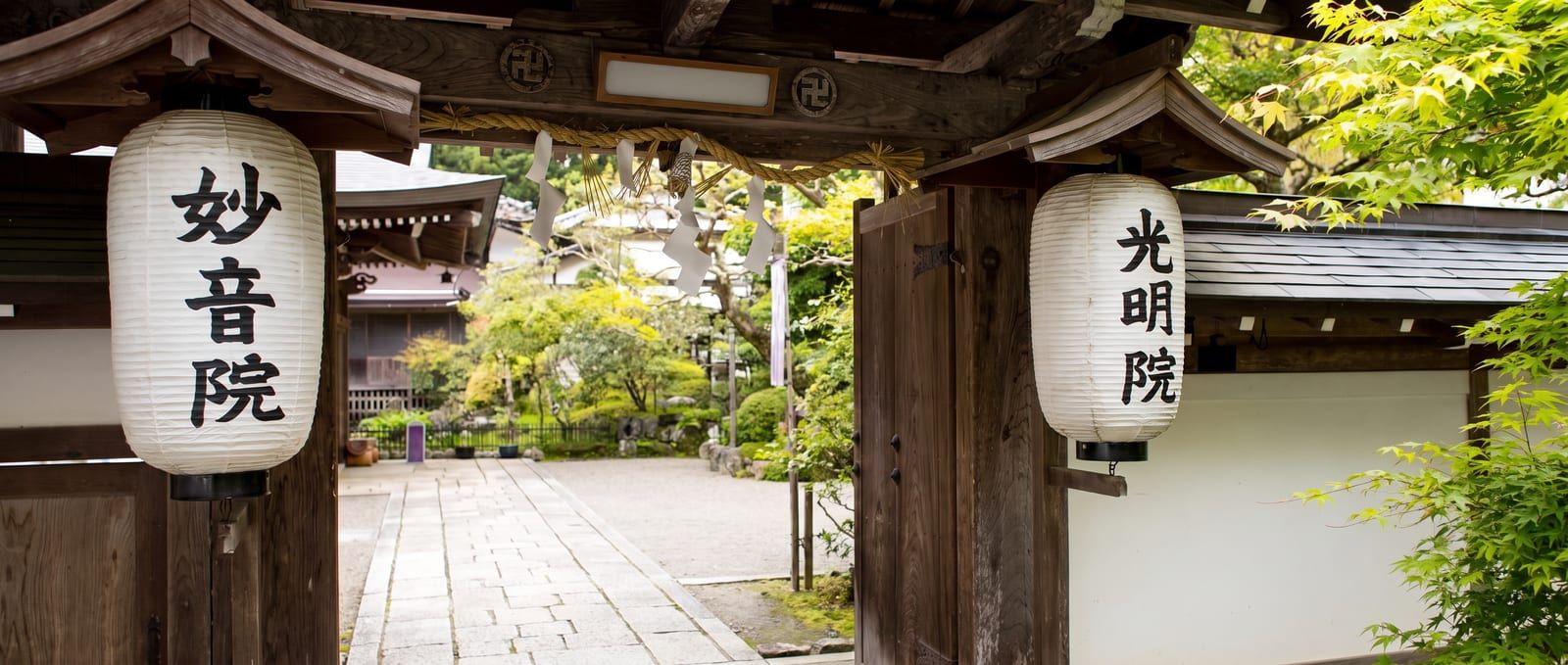
Komyo-in (光明院) is a temple lodging, or shukubo, at 493 Koyasan, Koya-cho, Ito-gun, Wakayama. You sleep in a simple Japanese-style room, eat vegetarian breakfast and dinner, and can join the temple’s morning service and goma. The temple is closed every Monday and Tuesday, and its own booking system lists a night from ¥14,000 per adult with dinner and breakfast.
By Alex · Updated 26 Nov 2026
Key points
- Komyo-in is about 300 m in a straight line from Ichi-no-hashi. The bridge marks the start of the path through Okunoin. From the temple, the nearest bus stop, Karukayado-mae, is a 2-minute walk.
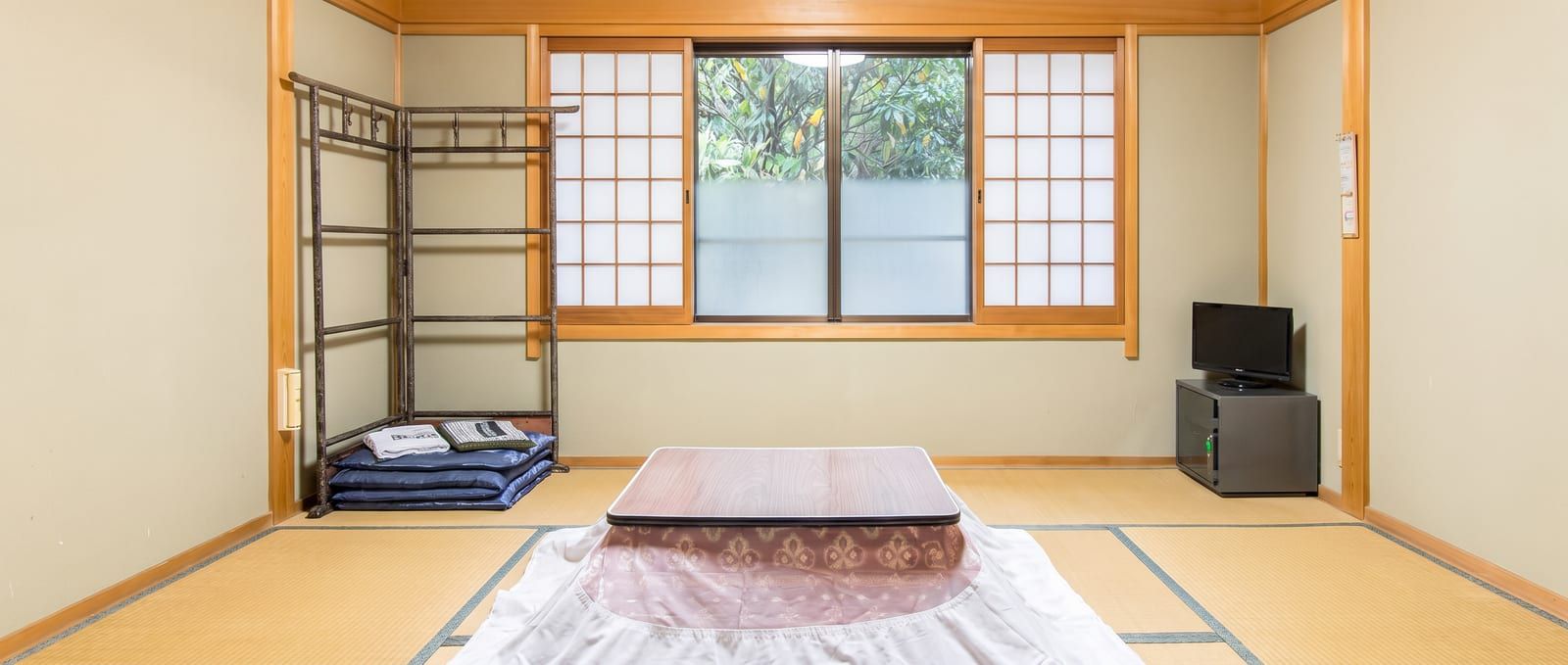
- Rooms are plain, Japanese-style and non-smoking. They measure 11 to 29 square meters, and some look out on the garden.
- Dinner and breakfast are vegetarian. They are served in a separate room, or sometimes in the hall, depending on events.
- Mondays and Tuesdays are closed days. Both sources put the start of check-in at 3 pm, though they give different check-out times.
- Booking.com, Trip.com and Agoda list it. Komyo-in’s own booking system gives a night from ¥14,000 per adult with dinner and breakfast (checked on November 12, 2026), and the temple has no plans in the temple association’s reservation system.
What kind of temple is Komyo-in?
Komyo-in is a semi-special head temple that also takes overnight guests as a shukubo. It has more than 800 years of history over 39 generations, and its founding dates to the Juei era (1183).
Founding story and ties to Awa
Its founding story begins with Prince Ene, a son of Emperor Go-Shirakawa, who died when Kiso Yoshinaka’s soldiers attacked the Hojuji palace. One of his disciples carried his remains up Koyasan and built a hermitage called Choribo to pray for him. The hermitage was later renamed Komyo-in.
The temple also has ties to Awa (Tokushima). It holds the remains of generations of the Hachisuka family and prays for the family and its retainers, and mortuary tablets of the Awa Hachisuka clan are kept in the main hall.
The main hall and its images
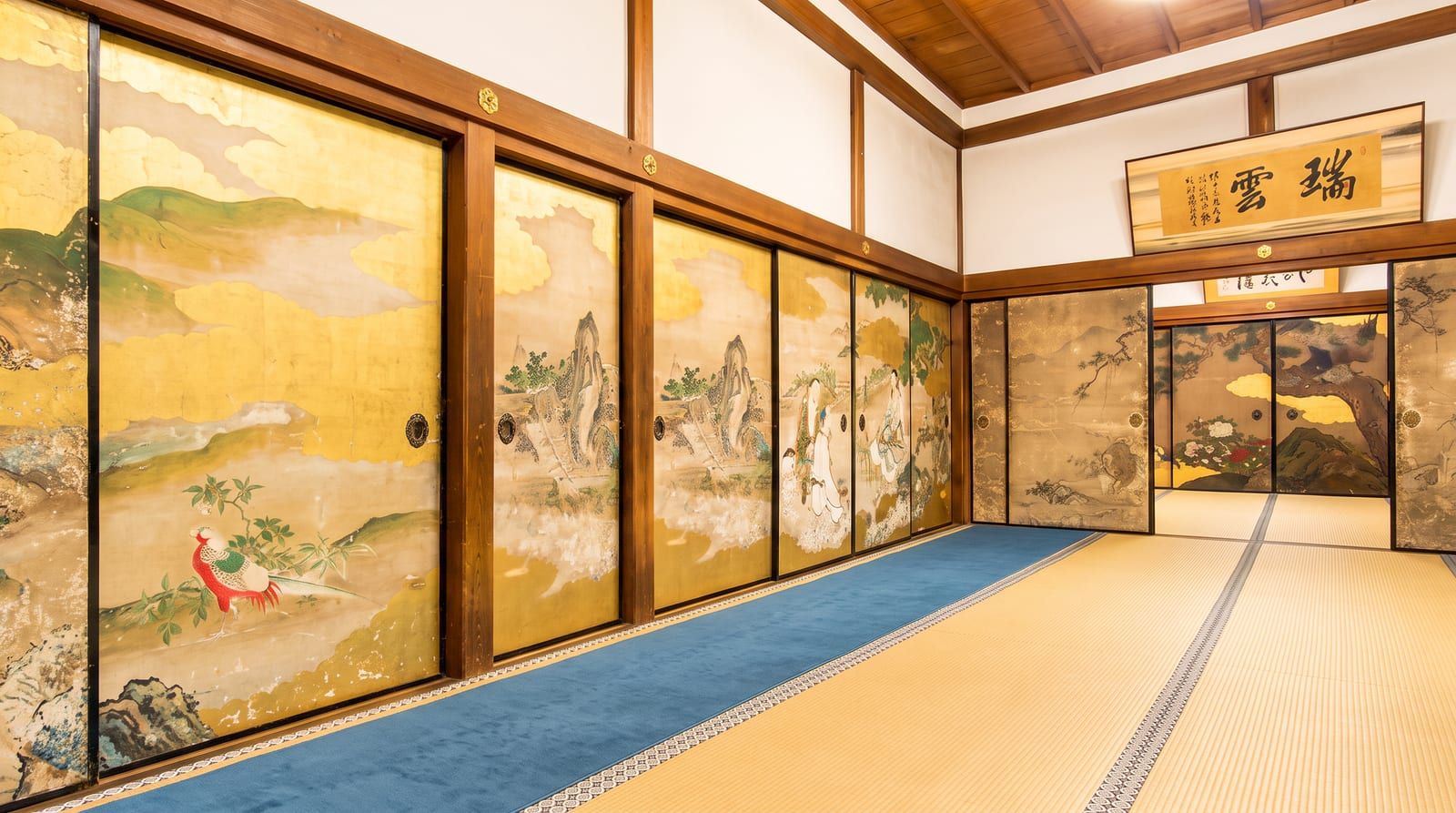
The principal image is a standing Amida Nyorai, and the temple’s treasures include a standing Fudo Myo-o, Benzaiten and Daikokuten. The main hall’s standing Amida Nyorai is flanked by Kannon and Mahasthamaprapta. The temple says this hall is a white-walled storehouse-style building (dozo), rare even on Koyasan. If you are still choosing a temple, you can compare all 36 temples.
Rooms, baths and what a night costs
Komyo-in has simple Japanese-style rooms of 11 to 29 square meters, from ¥14,000 per adult with dinner and breakfast in the temple’s own booking system. All rooms are non-smoking, and some face the garden, which changes with the seasons and has rhododendrons in spring.
The sources disagree on room numbers and capacity. The temple association’s Japanese page lists 32 rooms, 16 with walls and 16 divided by fusuma sliding doors, for about 80 individual guests; its English page gives a capacity of 50 individual guests; and Komyo-in’s own site says 12 Japanese-style rooms.
Komyo-in’s own pages also differ on air conditioning: the room page says all rooms have air conditioning and a TV, and the precincts page says some rooms do. Rooms come with a tea set, pot, yukata, tanzen (padded robe), bath towel, towel and toothbrush.
Baths and toilets
Komyo-in has one indoor bath for men and one for women, open from 5 pm to 9 pm, and no open-air bath. The large communal bath has body soap, rinse-in shampoo and a hair dryer.
The facilities include Western-style toilets and a toilet for disabled guests. No source this guide used says that any room has its own toilet or bath, so if you need one, ask before you book.
What a night costs
Komyo-in’s own booking system (checked on November 12, 2026) lists its basic plan with dinner and breakfast, tax included, per adult: from ¥14,000 in a 6-tatami room, ¥16,000 in an 8-tatami room and ¥18,000 in a larger room. Prices change by date and number of guests.
What you can join: morning service, goma and sutra copying
Komyo-in offers the morning service, goma, meditation and sutra copying as experiences. In the basic plan on the temple’s booking system, meditation, sutra copying and the goma are included free; meditation starts at 7:30 pm, and you can copy a sutra at any time you like. Other listings give sutra copying at ¥1,000, so check what your plan includes. You can also trace a Buddha image (shabutsu) by reservation.
The temple has a library and a sutra-copying room; their hours are set, so ask at the temple office. The office also gives out red seal stamps (goshuin) and amulets.
Morning service
The main hall holds services every morning and evening. The sources differ on the morning service: the temple association’s page gives 6:30 am in summer and 7:00 am in winter, free of charge, while Komyo-in’s own list of daily events gives 7:00 am every day in the main hall. Since they differ, confirm the time with the temple.
Goma
The Gomado is a prayer hall whose principal image is Fudo Myo-o. Guests can take part in the goma the next morning, and a goma offering is listed in the Gomado every day at 8:00 am or 1:00 pm.
What you eat at Komyo-in
Breakfast and dinner are vegetarian dishes, and you eat them in a separate room. Depending on events, you may be asked to eat in the hall instead. The meals follow the seasons.
Shojin ryori is Koyasan’s representative cuisine, a traditional food developed under strict rules that forbid eating meat. If you want meat with dinner, a night here will not suit you.
Where Komyo-in is and how to get there
Komyo-in is at 493 Koyasan, about 300 m in a straight line from Ichi-no-hashi, the first bridge and the start of the path through Okunoin. It stands back from the street, near the Koyasan Kaikan hall, the community center and the gym.
From Namba, the Nankai Koya Line takes about 90 minutes by limited express, or about 100 minutes by express, to Gokurakubashi. The cable car then takes 5 minutes to Koyasan Station.
Take the bus from stop No. 2 toward Okunoin-mae. The nearest stop is Karukayado-mae, a 2-minute walk from the temple. For the full trip, see which train to take to Koyasan.
Check-in, closed days and other practical details
Check-in starts at 3 pm in both sources, and Komyo-in is closed every Monday and Tuesday. Other times differ by source: the temple association’s page gives check-in from 3 pm to 5 pm, check-out at 10 am and a curfew at 9 pm, while Komyo-in’s own site gives check-out at 9:30 am. The temple’s booking system adds that guests who arrive after 6:30 pm cannot be served dinner, for food hygiene reasons; the stay then counts as a same-day cancellation and the meal is not refunded.
Komyo-in is completely non-smoking, with a smoking area next to the entrance. It also takes groups for training and camps.
Where to book Komyo-in
Komyo-in is listed on Booking.com, Trip.com and Agoda; this guide did not find it on Rakuten Travel. It has no plans in the temple association’s reservation system.
Check the cancellation terms of the plan you book. The basic plan in the temple’s booking system charges 100% of the room rate from 3 days before your stay, on the day and for a no-show, and the temple asks to be told of a cancellation at least 2 days ahead. To weigh it against other temples, see Eko-in and the Shojoshin-in temple stay, or compare all 36 temples.
Is Komyo-in a good fit for you?
Komyo-in suits you if you want vegetarian meals and daily temple services, and it does not suit a Monday or Tuesday visit.
| Your situation | Good fit? | Why |
|---|---|---|
| You plan to walk the Okunoin path | Yes | About 300 m in a straight line from Ichi-no-hashi |
| You can only come on a Monday or Tuesday | No | Closed every Monday and Tuesday |
| You want to join temple rituals | Yes | Services every morning and evening; guests can join the goma |
| You need a private toilet or bath | Unclear | No source says any room has its own |
| You are visiting for the day only | Maybe | Lunch by reservation, basically Sundays only, not every Sunday |
How this guide was researched
This page draws on the Koyasan Shukubo Association’s English, Japanese and reservation sites, Komyo-in’s official website, the Booking.com, Trip.com and Agoda listings, and OpenStreetMap. In all, 11 sources were read. Where they disagree, the page gives each source’s figure.
FAQ
What time is the morning service at Komyo-in?
It depends on the source. The temple association gives 6:30 am in summer and 7:00 am in winter, while Komyo-in’s own events list gives 7:00 am every day.
Does Komyo-in serve lunch to day visitors?
Yes, by reservation. Visitors who are not staying can book a shojin ryori lunch for 3,850 yen or 5,500 yen, tax included. It is basically offered only on Sundays, and on some Sundays not at all.
Can Komyo-in store my luggage?
Yes. The temple keeps luggage before check-in and after check-out, so you can leave your bags there on arrival and on departure.
How far is Komyo-in from Okunoin?
In a straight line, Komyo-in is about 300 m from Ichi-no-hashi, the first bridge, where the path through Okunoin starts. No source this guide used gives a walking time to the bridge.
Does Komyo-in accept credit cards?
Yes. The temple accepts VISA, DC, JCB, Diners, AMEX and Mastercard, for accommodation and lunch only.
Is there parking at Komyo-in?
Yes, though the sources give different figures. Komyo-in’s site says free parking for 3 buses and 15 cars, for guests staying or eating lunch; the temple association’s Japanese page says 4 buses and 20 cars.
Sources
- Koyasan Shukubo Association (eng-shukubo.net)
- Koyasan Shukubo Association, Japanese site (shukubo.net)
- Koyasan Shukubo Association reservation site (koyasan-shukubo.net)
- Komyo-in official website (komyouin.jp)
- OpenStreetMap
- Booking.com
- Trip.com
- Agoda