Staying with monks in Japan: a night in a Koyasan temple
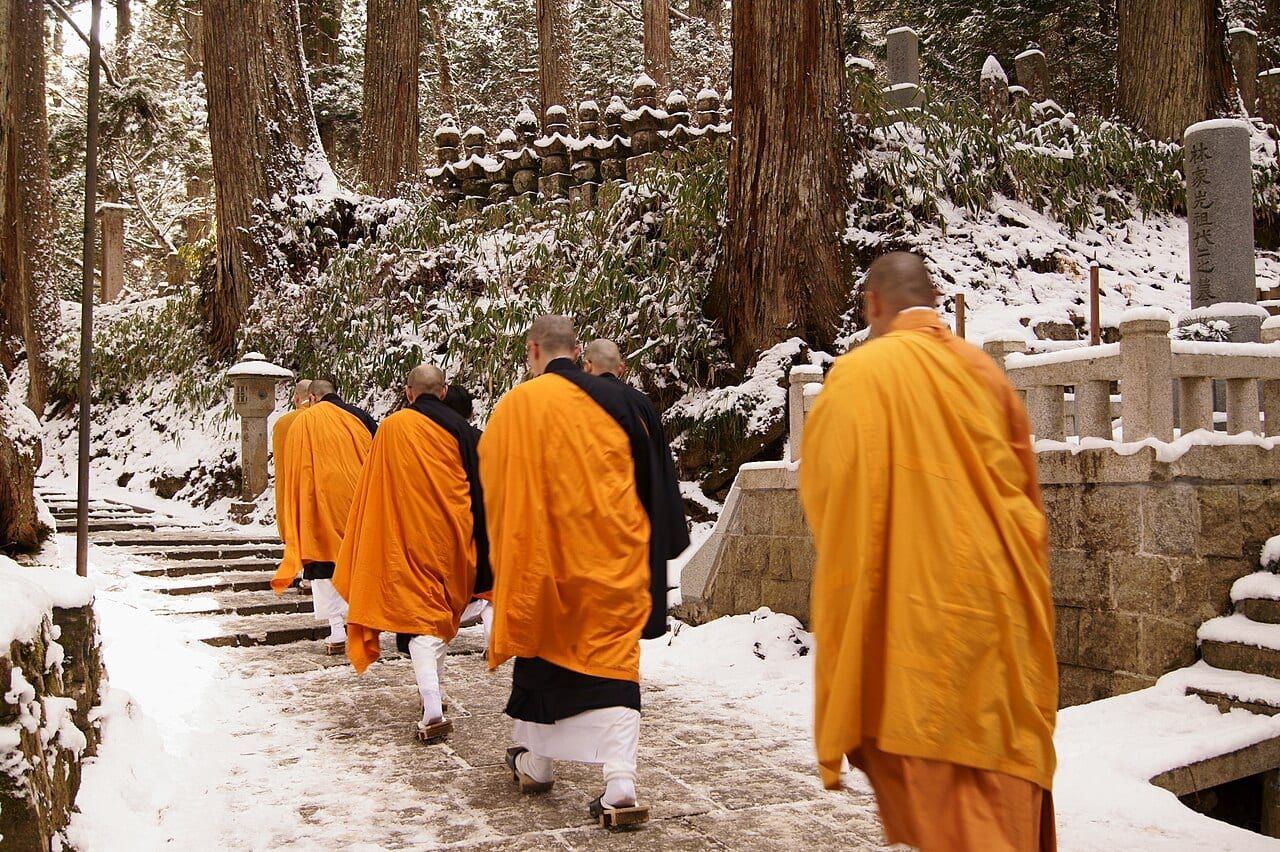
You can stay with monks in Japan by booking a night at a shukubo, one of the Koyasan temples that take overnight visitors. Monks and temple staff help guests, and dinner and breakfast are vegetarian shojin ryori.
A service is held early every morning in the main hall, and overnight guests may take part or watch. Some temples also offer meditation, a goma fire ritual or sutra copying, and faith is not a condition for staying.
By Alex · Updated 12 Nov 2026

Key points
- Koyasan’s temple lodgings take overnight guests. The Koya Tourism Association counts 51 and the Koyasan Shukubo Association’s Japanese site 52; 36 of them can be booked through at least one of four booking partners checked for this guide.
- There is a service early every morning. The chief priest and monks chant sutras in the main hall, anyone staying can join, and it may begin at around 6:00 am, depending on the temple.
- Practices beyond the service vary by temple. Sutra copying is listed by 31 of the 36 bookable temples, meditation by 17 and the goma fire ritual by 10.
- Both meals are vegetarian. Dinner and breakfast are shojin ryori, and dinner comes at a fixed time, such as 6:00 pm at Rengejo-in.
- Prices come in two general ranges. Per adult with dinner and breakfast, a Japanese-style room with shared bath and toilet is ¥15,000-25,000, and a room with a private toilet or its own bath and toilet is ¥20,000-70,000.
Can you stay with monks in Japan?
Yes. In Koyasan, you can stay overnight at temples that serve as shukubo. The count differs by source: the Koya Tourism Association and the Koyasan Shukubo Association’s reservation site say 51, while the association’s Japanese site lists 52.
Of these, 36 can be booked through at least one of four booking partners checked for this guide: Booking.com, Trip.com, Agoda and Rakuten Travel. This page calls them the 36 bookable temples. For individual temples, see temple stays in Koyasan.
As for language, 17 of the 36 bookable temples show a sign of English: an English version of the temple’s website, or English among the front-desk languages on Trip.com.
What a night in a Koyasan temple looks like
A night in a Koyasan temple runs on fixed times, from an afternoon check-in to a service early the next morning. Of the 26 bookable temples that list a check-in time, 21 start check-in at 3 pm and 5 at 2 pm.
Dinner times are fixed too. Eko-in serves dinner at 5:30 pm and asks you to tell the temple if you will arrive later. Ichijo-in serves it strictly at 5:30 pm and asks you to arrive by 5:00 pm, while Rengejo-in serves it at 6:00 pm.
Of the 36 bookable temples, 21 list a curfew, most often 9 pm (11 temples), while Eko-in says it has none. At Shojoshin-in, a priest can give a Dharma talk or tell the temple’s history if you ask, though not always, because of capacity.

The morning service
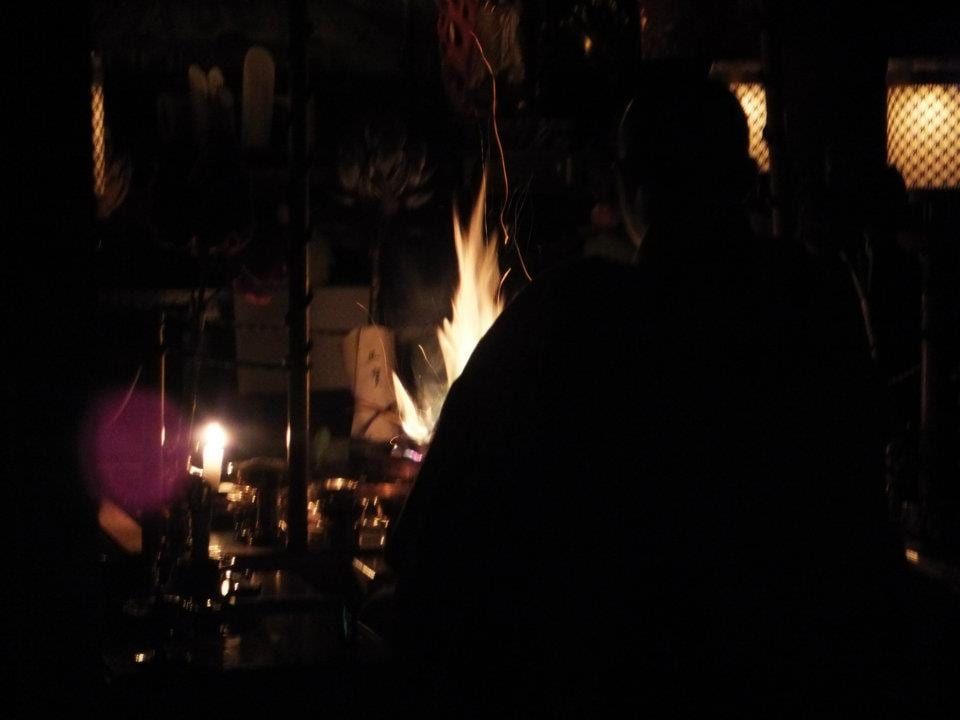
The morning service is a Buddhist service held early every morning in the main hall, where the chief priest and monks chant sutras. Anyone who stays at a shukubo can join: you sit in the main hall, listen to the chanting of sutras and shomyo, pray and offer incense.
Depending on the temple, the service may start at around 6:00 am. A morning service is listed for 26 of the 36 bookable temples; 22 of them give a summer start time, and the earliest is 5:50 am, at Daien-in. Examples from three temples:
- Rengejo-in holds morning prayers at 6:00 am and reads out names of the departed if you ask the day before.
- Ichijo-in starts its service at 6:30 am; guests may come in from about 6:10 am, and no booking is needed.
- At Shojoshin-in, guests can watch about an hour of chanting from 6:30 am.
Meditation, fire rituals and sutra copying
Meditation, goma fire rituals and sutra copying depend on the temple: of the 36 bookable temples, 17 list meditation, 10 a goma fire ritual and 31 sutra copying, counted from the temples’ official pages.
Ajikan meditation
Ajikan is a Shingon breathing and meditation practice: you sit before the Sanskrit letter “A”, which stands for Dainichi Nyorai, to become one with the Buddha who is the universe itself. Only a few shukubo can offer ajikan to private visitors. You can also try it without staying the night: Kongobu-ji holds ajikan sessions from April to November on Fridays, weekends and holidays for ¥1,000 (plus temple admission), and Eko-in takes day visitors for a ¥2,000 offering.
Goma fire ritual
Goma is one of the most characteristic rites of esoteric Buddhism: a fire is lit on a wooden altar, and incense, grains and other offerings are given to the Buddha. The goma sticks stand for worldly desires, burned away by the fire of wisdom.
Sutra copying
Sutra copying (shakyo) means carefully tracing a model of a sutra, and shabutsu means tracing an image of a Buddha; both can be offered to a temple.
At three temples
- Eko-in holds goma every day at 7:30 am and ajikan every day from 4:30 pm, both free for overnight guests, and lets guests copy a sutra in their room at any time.
- At Rengejo-in, the monks practice ajikan every evening at 5:00 pm and invite guests to join.
- Shojoshin-in holds goma every day at 1 pm, and you may write a prayer on a goma stick.
Temple food: dinner and breakfast
Dinner and breakfast on a temple stay are shojin ryori, the vegetarian meals served at Koyasan’s shukubo. The details differ by temple.
At Eko-in, dinner and breakfast exclude meat, fish, eggs, dairy, onion and garlic, and both are served in your room. At Rengejo-in, the monks serve dinner in a large hall divided by fusuma.
Special diets vary as well. Rengejo-in can cater for vegan diets, while Ichijo-in cannot cater for gluten-free or other individual diets, so if you eat gluten-free, Ichijo-in is not a fit.
Rooms, baths and house rules
Baths are usually shared and open at set hours, some temples have rooms with a private bath or toilet, and rules differ by temple. At Fudo-in, for example, there are no special rules, but guests are asked to keep quiet in a sacred place.
Rooms
At 11 of the 36 bookable temples, at least some rooms have a private bath, and at 17, some rooms have a private toilet. Some rooms are divided only by fusuma, and at Rengejo-in the walls of some rooms are thin paper.
Baths
Komyo-in’s baths are open from 5 pm to 9 pm, and Shojoshin-in’s from 4 pm to 9 pm. Ichijo-in’s public baths close at 9:00 pm and are not open in the morning, but private baths in rooms are open 24 hours.
Etiquette and clothing
No source used here gives general etiquette rules for temple stays, such as shoes, clothing in the halls or photography inside temples. On GetYourGuide, DeepExperience’s Okunoin tours require modest clothing because Koyasan is a religious site, and guests in tank tops, camisoles, off-shoulder tops, miniskirts, shorts or yukata cannot join.
What it costs and who it suits
General prices on the Koyasan Shukubo Association’s reservation site are ¥15,000-25,000 per adult, with dinner and breakfast, for a Japanese-style room with shared bath and toilet. For a room with a private toilet, or with its own bath and toilet, the site gives ¥20,000-70,000.
Some experiences have their own price. Prices for sutra copying differ by temple: for example, 1,500 yen at Rengejo-in or 2,000 yen at Shojoshin-in. At the Jukai-do (precept hall), visitors can receive ten Buddhist precepts in a 30-minute ceremony for a 1,000-yen fee.
A temple stay suits you if you want the morning service and temple meals as part of your booking. It suits you less if a shared bath and a fixed dinner time would bother you. To choose a temple, start from temple stays in Koyasan.
Is a temple stay right for you?
A temple stay is right for you if you want to join monks at prayer; children, special diets, English and private bathrooms depend on the temple.
| Your situation | Good fit? | Why |
|---|---|---|
| You want to see monks at prayer | Yes | Anyone staying can join the morning service |
| You are a woman traveling alone | Yes, at Eko-in | Eko-in says women traveling alone are welcome |
| You need English | Depends on the temple | 17 of the 36 bookable temples show a sign of English |
| You travel with young children | Depends on the temple | Fumon-in takes no children; Ichijo-in takes elementary school age and up |
| You eat vegan or gluten-free | Depends on the temple | Rengejo-in can cater for vegan; Ichijo-in cannot cater for gluten-free |
| You want your own bathroom | Sometimes | 11 of the 36 bookable temples have some rooms with a private bath |
How this guide was researched
This guide draws on the Koya Tourism Association, the Koyasan Shukubo Association’s English, Japanese and reservation sites, and individual temples’ official websites. It also uses listings on four booking partners (Booking.com, Trip.com, Agoda and Rakuten Travel) and on GetYourGuide; in all, 15 sources were read, and the temple counts on this page were made from them.
FAQ
Do I have to be Buddhist to stay in a temple?
No. Faith is not a condition: Eko-in says people of all religions and denominations can visit Koyasan, and Ichijo-in welcomes guests of all faiths. Fudo-in says you need not be a Shingon follower.
Do I have to join the morning service?
No. Overnight guests may take part in the service or watch it. Taking part means sitting in the main hall while sutras are chanted, praying and offering incense.
What time is the morning service?
It depends on the temple, and it may start at around 6:00 am. Of the 22 bookable temples that give a summer start time, the earliest is 5:50 am at Daien-in.
Is the food at a temple stay vegetarian?
Yes. Meals on a temple stay are shojin ryori, vegetarian food served at dinner and breakfast. At Eko-in, both meals leave out meat, fish, eggs, dairy, onion and garlic.
Can I try meditation at a temple stay?
Yes, at some temples: 17 of the 36 bookable temples list meditation. For ajikan, Eko-in holds a session every day from 4:30 pm, and at Rengejo-in the monks invite guests to join them at 5:00 pm.
Do temples in Koyasan have a curfew?
Yes, 21 of the 36 bookable temples list a curfew, most often 9 pm (11 temples). Eko-in says it has none.
Can children stay at a temple in Koyasan?
Yes, but the rules differ by temple. Fumon-in does not take children, and Ichijo-in takes children of elementary school age and up. At Rengejo-in, preschool children (6 and under) cannot take part in ceremonies.
Sources
- Koya Tourism Association (koya.org)
- Koyasan Shukubo Association (eng-shukubo.net)
- Koyasan Shukubo Association, Japanese site (shukubo.net)
- Koyasan Shukubo Association reservation site (koyasan-shukubo.net)
- Booking.com, Trip.com, Agoda, Rakuten Travel
- Eko-in official website (ekoin.jp)
- Rengejo-in official website (rengejoin.jp)
- Ichijo-in official website (itijyoin.or.jp)
- Shojoshin-in official website (shojoshinin.jp)
- Fudo-in official website (fudouin.or.jp)
- Komyo-in official website (komyouin.jp)
- Fumon-in official website (fumonin.net)
- Other temples’ own websites
- GetYourGuide